 |
| No signs of thawing yet as of today along my St. Albans, Vermont driveway. I've decided to rename the path Snow Canyon Drive for obvious reasons. |
The winter sports industry - skiing riding, cross country, snowshoe, snowmobiling, ice climbing, ice fishing and anything else winter - is thriving this President's Week.
The spring melt will wipe away the last vestiges of last autumn's drought.
Plus, it's a rare, old fashioned winter. The kind we don't often see nowadays in this age of climate change. It's a bit of a throwback to the 1970s, when the snow was always super deep and the air was always frigid.
True, this year isn't nearly as extreme as some of those in the 1970s but you get the idea.
However, being a glass half empty kind of guy, I do have to point out the dark side of this blinding outdoor winter whiteness out there.
This stuff can cause trouble.
ROOF TROUBLE
It's been years since snow has gotten this deep, and some weaker structures might be in trouble with all this snow loading.
A barn in Williamstown, Vermont collapsed under the weight of the snow Monday evening, killing at least six cows. It was the first major structure collapse I've heard of in Vermont this year, but who knows? There might be others coming.
In my drives around northwest Vermont, I'm noticing a lot of ice dams on roofs for the first time in a few years. That will surely lead to water leaks and interior water damage to who knows how many houses. I'm lucky at my house. Ever since we installed a standing seam roof in 2017, the snow slides off and we don't get ice dams.
However, the snow that slides off puts a LOT of weight on our back deck and that entails another rigorous shoveling job to keep the deck standing.
It's been much worse this winter in parts of western and central New York, where the lake effect snow squalls have really been working overtime since late November, really.
Just yesterday, the roof a a wire factory in Williamstown, New York, which is within the Lake Ontario snow belt collapsed under the weight of snow and ice. Workers heard cracking noises in the ceiling early Tuesday and evacuated, so nobody got hurt.
A short distance down the road from the wire factory, a church roof collapsed.
Elsewhere in New York, a business collapsed under the snow near Rome, New York. A Walmart Super Store in Central Square New York temporarily closed over concerns regarding snow on the roof. They hope to reopen once the snow is removed.
SALT SHORTAGE
Expect Vermont roads to be even worse than usual during and after any remaining snowfalls and mixed precipitation episodes we see before spring sets in.
Vermont is among a number of states facing a road salt shortage.
The town of Lyndon is almost completely out of salt. St. Johnsbury is reserving what little salt they have and only treating roads once storms have ended, reports WPTZ.
No word yet on how that will affect the Vermont highway department and other towns. But I bet they're conserving salt.
CLEARING SNOW
If you have a fire hydrant near your house, head out and clear away a big patch of snow away from the hydrant if you have not done so already. Shovel a path from the road to the hydrant, and push the snow at least three feet away from the hydrant in every direction,
Go around your house to see if there are vents or other equipment that are blocked by snow or nearly blocked. Vents especially can back up dangerous carbon monoxide into a house if the snow if blocking them.
Got a mailbox out front? This is hard because of all the rock solid stuff plowed from the road, but try to clear an indentation so the mail vehicle can reach your mailbox without getting stuck. Try to make it so they can move forward without getting stuck after dropping off your mail.
Do you heat your house with heating oil? Or propane? Getting low on fuel and need a delivery? Make sure you've cleared a path so that the delivery person can make it to the intake easily to fill your fuel tank.
My brother in law is a former fuel delivery driver and he has nightmare stories of trying to drag the hose through snow a few feet deep to reach the intake. Do them a favor.
SPRING FLOOD?
Believe it or not, as of last Thursday, most of Vermont was considered "abnormally dry" and a small portion of southern Vermont was still regarded as in drought.
I think that' mostly because it has pretty much just snowed and sleeted in recent weeks. Moisture from all snow is yet to make it into the ground and our rivers and streams.
This weekly drought monitor will be updated tomorrow, so it will be interesting to see if there are any changes. The National Weather Service in South Burlington will also update their biweekly late winter/early spring outlook tomorrow.
Since January, those updates have rated the risk of flooding below normal, mostly because no big thaws are in the offing. That's still true. But in January, snow and the water equivalent in the snow was below normal. Now I expect the snow depth and water equivalent to be at or above normal. We shall see.
So, as I mentioned earlier in this post, this snow is good news.
Unless it isn't.
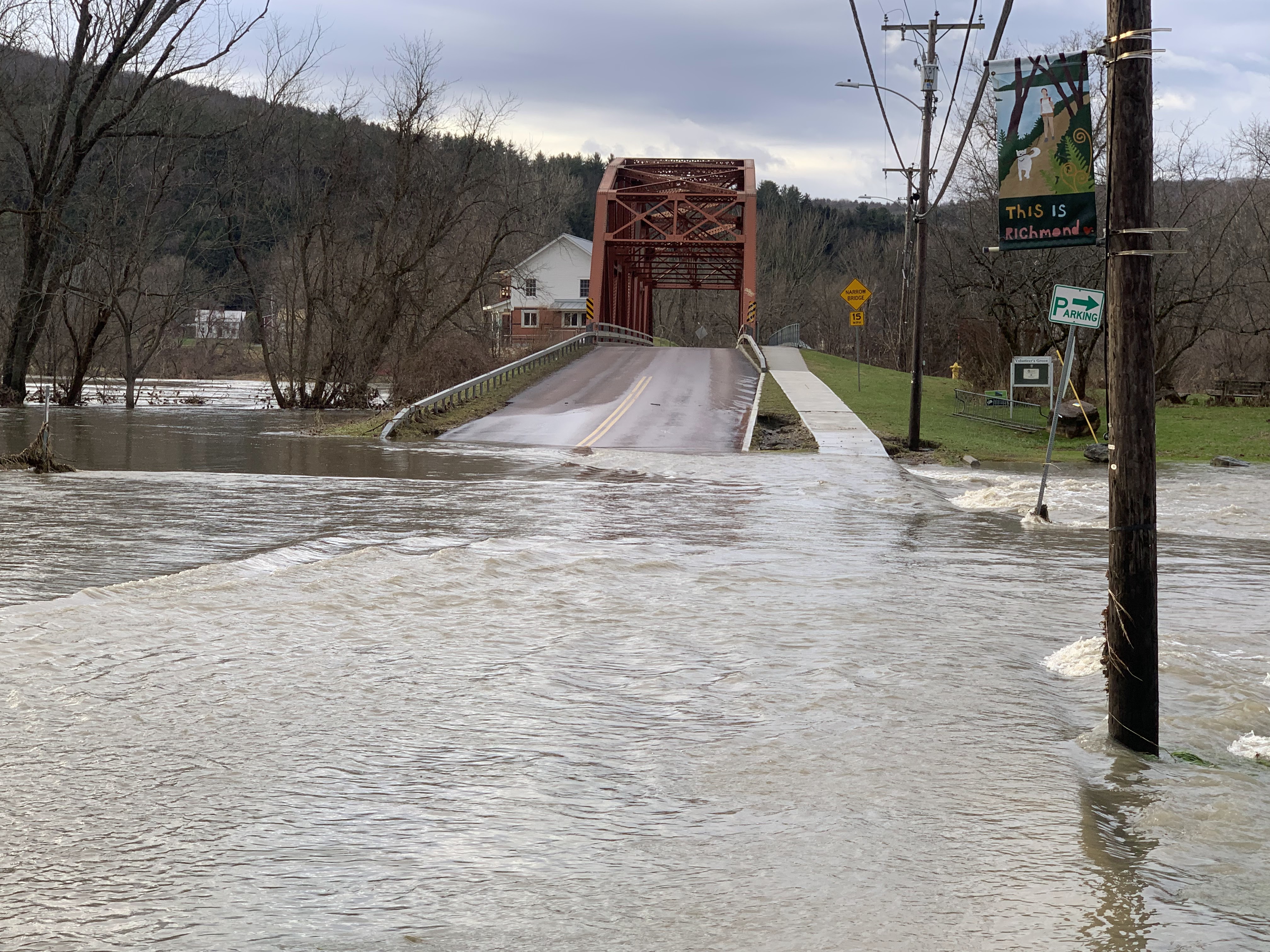
If the snow melts very fast toward spring and is accompanied by heavy rain, we'd end up with some pretty nasty flooding. That's especially true since river ice is thicker than it's been in a few years. A sudden thaw could break up the ice and create ice jams. Which cause flooding.
The best scenario would be if we have a perfect maple sugaring March and April. That means warm, mostly dry days and hard overnight freezes. Preferably daily.
That would cause a gradual snow melt. The moisture would just soak into the ground and we'd start our growing season with plenty of water sitting there to keep our gardens and crops happy.