Showing posts with label tourism. Show all posts

Wednesday, September 17, 2025

Vermont Drought: Effects Are Getting Widespread And Severe

The beach at Sandbar State Park in Milton, Vermont is
a LOT bigger than it used to be thanks to a near
record low Lake Champlain. The drought is 
depleting water statewide. 
As anybody can see by just looking around them, Vermont's punishing drought keeps taking a mounting, frustrating toll.  

It's now doing pretty much everything a drought can do. Dry wells, water shortages, fire danger, crop losses, shockingly low rivers and lakes. And there's no end in sight. 

We're witnessing another side of the disastrous extreme climate change is bringing to Vermont. Climate change is hitting everywhere, and we have seen our share of trouble here in the Green Mountain State. 

We had so many floods in recent years that these inundations felt like our "new normal." That turned out to be only part of the story.  Climate change is surely bringing more intense rains and floods. But it also  bringing worse droughts. 

We had a close miss in that regard last fall, when things started getting disconcertingly dry in Vermont. We were on the northern edge of a punishing drought that set forests ablaze from Pennsylvania and New Jersey to Massachusetts and Maine. 

We got lucky because rain and snow returned last winter and spring. We were temporarily rescued from some serious drought effects.

Now, we're not so fortunate.  The drought is consuming so much of our lives now.  Even if our wells are still running well, we look around at wilted plants, brown mountainsides and Vermont's once clear, rushing streams now turned into empty gravel pits. 

There's so many examples of what this drought is doing to us. I have some of the receipts: .

CROPS/LIVESTOCK

The drought is battering crops. It's peak apple season. What apples we have in Vermont are of good quality, but there's just not many of them.  It was super rainy during spring pollination season, so bees didn't have a chance to do their work then, because they don't do their work in stormy weather. 

Then the drought hit. You need lots of water to make big apples. So, they're small this year. Between the wet spring and the drought, some Vermont growers are saying they only have 50 percent of their expected apples

Dairy farmers are struggling with a lack of feed and water shortages. Some farmers are being forced to buy feed from elsewhere, which is very expensive.  Since profits - when they come - are extremely slim in dairy farming, this could become a serious crisis for some.  It could even shut down some of Vermont's already dwindling number of farms. 

FORESTS AND FIRES

Most Vermont brush and woodland fires come in the early spring shortly after the snow melts. There's dead vegetation and sunshine dries it out. Green leaves haven't appeared yet.

This spring in Vermont was wet, so we didn't get the usual number of fires. A few months ago, we thought we'd have an easy fire year. I guess we thought wrong.  

Through September 11, Vermont has seen 60 fires which have burned through 52.41 acres.  Expect this number to rise, possibly fairly quickly, until we get some decent, consistent rains. That's more than the total number of fires in some entire years, like 2017 and 2019.

Last year, Vermont had a busy time with fires, with 99 of them scorching a total of 180.6 acres. That was in large part due to a dry autumn which helped spark numerous fires. 

Autumn, 2024 could give us a hint of what we face in the coming month or two. The trouble would really begin in October as leaves fall from trees and dry out, and underbrush succumbs to the increasing chill of the season, turns brown and dies. That will provide more fuel for fires. It could make last autumn's blazes look like a campfire in comparison. 

Some or even many of those trees on thin, rocky soil you saw wilting and turning brown in August might never come back. The drought might well have killed them. We won't know for sure until spring when trees normally leaf out. 

The drought is leaving behind more dry wood to fuel forest fires.  The drought-killed trees, combined with the many more ash trees done in by the emerald ash borer, are combining to leave a lot of dead, dry wood around. 

Areas with a lot of dead trees would burn more easily, and burn hotter in this current drought.  The problem will also last for several years as the deceased trees will be there for years. They'll increase the fire risk during future droughts. 

Meanwhile, the forest fire danger today is high, as it's been for a week or more now. 

WATER SUPPLIES

 Many private wells have gone dry. The Vermont Agency of Natural Resources asks people with low or dry wells to report their issues and to visit its website to find a list of local water haulers and other drought resources. 

Vermont officials are trying to make sure they understand the extent of the problem. If your private well or spring is dry or low, the Department of Environmental Conservation is encouraging people to submit information to their Drought Reporter

 Some fire departments are trying to refill wells with their trucks, but not all can do that. Municipalities are running short of water, too, and have to supply the whole town. They can't use the limited amount of water left in reservoirs to refill private wells. 

A glimpse of the near future in Vermont might be comings from Moriah, New York. The town of 4,800 a little west of Port Henry has imposed an emergency water ban that prohibits all non-essential outdoor and indoor water use for at least six days. 

TOURISM

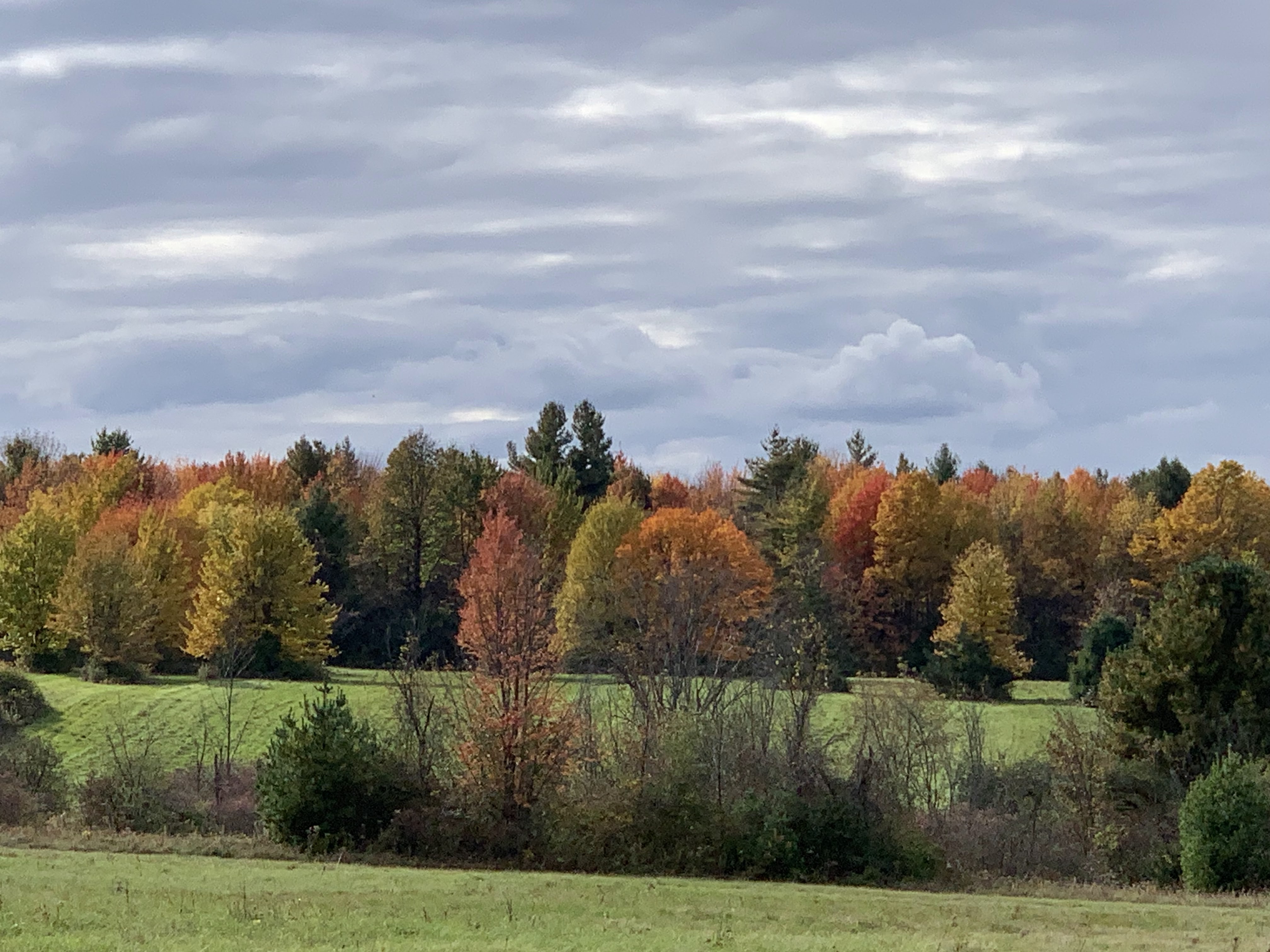
The drought is certainly affecting Vermont's famed foliage season. Despite warm weather, trees are turning color earlier than usual because trees are stressed by the dry weather. 

Worse, the color might well be dull. I've seen some hillsides turning a sad brown because green leaves are wilting for lack of water.  Other areas are mainly still green.  Droughts often dull the vibrancy of autumn foliage, and that might be the case this year.  We won't know for sure until fall foliage season reaches its peak.  

It'll still be pretty, but perhaps not as colorful as most years. We shall see.

I haven't heard much yet about how the drought might affect ski areas. They use a lot of water to make snow, and there's no longer much water available. Ski conditions might suffer, we shall see.

OUTLOOK

The weather forecast still has not changed much. Some clouds will cover the sky today, but will yield no rain. The humidity will stay low, too. Thursday will bring warm, dry weather. 

A cold front is still likely to come through Thursday night. A couple towns might get a sprinkle, that's it. 

Then, after a couple cool, dry days, it will turn warm and dry again. The next chance of rain still looks like it would come around September 25 and 26. 

However, some early indications are that next storm might slide by to our south, keeping the dry weather going. We don't know that for sure, so keep your fingers crossed!

Forecasts through September 30 keep us dry,  I don't see any big changes in this bad, dry weather pattern. 

The next weekly U.S. Drought Monitor report comes out tomorrow morning. It  hasn't rained in Vermont since September 7, so I'm sure the report will confirm things have gotten even worse.  

Sunday, October 27, 2024

Foliage Season Brought 2.5 Million Visitors To Vermont

Scenes like this in Underhill Vermont on October 17
drew 2.5 million leaf peepers to the not so Green
Mountain State this autumn.
If you live in Vermont and felt kinda crowded during October, there's a great reason why.  

A new report says 2.5 million leaf peepers roamed the state during the foliage season and left behind a cool $500 million in spending on lodging, restaurants, attractions and other related stuff, reports WPTZ

The numbers aren't final either. As of this weekend, there were still some straggling colorful leaves left over to add a little beauty to our increasingly stick season surroundings. That meant there were a few straggling tourists taking in the last of the foliage. 

WPTZ checked in with some individual businesses to see how they did, and their reporters got the same story state tourism officials were telling them. 

"It was the busiest we've ever seen; I mean, you can still see it's busy, and it just kept on going, we have seen record numbers, and it's amazing We love it," Andrew Tascarella, the floor manager at Shaw's General Store in Stowe told WPTZ. 

In the fall foliage mecca of Woodstock, Vermont, the local Chamber of Commerce said they've also had an incredibly busy autumn. 

It appears people were not deterred by the nationwide reports of severe flooding in the Green Mountain State this summer. While people are still certainly suffering in the destructive aftermath, almost all the state was patched up, repaired and ready for tourists.

The weather was certainly gorgeous in September and October, and that helped. It probably didn't influence people who came here from long distances, seeing how they probably made their travel arrangements well before weather forecasts blared the good news about the sunny skies.

Then again, the bright weather to match the bright foliage probably encouraged those tourists to explore and spend money, rather than holing up in their hotel rooms on cold rainy days.

The fantastic weather also probably encouraged spur of the moment day trippers to take a trip up here to Vermont, I imagine. 

The abnormally warm autumn, the nearly daily sunshine and placid weather kept those colorful leaves on the trees later in the season than they would have if we had our typically stormy, windy fall.  That kept the leaf peepers peeping in Vermont longer than in most years.

This is subjective, but I'd give the quality of this year's foliage a B+.  It wasn't the most brilliant display I can remember, as the bright reds were somewhat lacking. But it was still gorgeously colorful and the tourists definitely got their money's worth.  

The big outbreak of snoliage - colorful leaves with snow covered mountains - that hit mid month was certainly a huge bonus. 

We are now getting into the November quiet before ski season arrives. The bulk of the winter sports folks won't be here for a good month or more. They need snow after all. Much of northern Vermont will get teased by some snow showers tonight that could leave a dusting even in many valleys. 

But record high temperatures are forecast Wednesday and Thursday, so those skis and snowboards probably won't get much use quite yet.  

For those who somehow missed the Vermont fall foliage this summer, what follows is a couple videos I took:

A "snoliage" tour around Cambridge and Underhill, Vermont on October 17. Click on this link to view, or if you see the image below, click on that. 


Next, some driving around northwestern Vermont last week yielded these images. Again, click on this link to view or if you see the image below, click on that. 


Monday, September 16, 2024

Vermont Foresters Think Foliage Season Will Be Gorgeous, Despite (Or Because Of) Wet Summer

Fall foliage in Charlotte, Vermont in October, 2023.
After a rough, wet summer, foresters still expect
the upcoming foliage season to be beautiful.
 The weather is very much like you'd expect in July this week, but if you look at Vermont hillsides, the colors of autumn are starting to creep in. 

So will this year be a dud or a beauty?

Vermont Public recent interviewed Josh Halman, the forest health lead for the Vermont Department of Parks and Recreation. He's one expert who thinks we're in for a good season. 

He has reasons. 

For one thing, the state is certainly not in drought, despite the current stretch of dry weather. 

Soil moisture is still good. Trees were never stressed for want of water this year, and they aren't now as they prepare to go into dormancy. 

Stressed trees sometimes create lackluster foliage, so we're in good shape there. 

On the other hand, if it's too wet, like this summer certainly was, fungus can thrive on the tree leaves. While this doesn't harm the overall health of the trees, it can make leaves turn brown and fall off early in the season, dulling the fall colors. 

While autumn, 2023 was certainly pretty, a few spots suffered because some of Vermont's trademark sugar maples struggled with the fungus. Their leaves, instead of turning brilliant orange and red, in some instances just turned brown and shriveled.

Autumn, 2022 brought very little of that fungus, and that year was subjectively, in my opinion the best in quite a few years. 

The good news is Halman said he has seen much less of the that fungus on sugar maples this year, at least compared to last year. That means the sugar maples should put on a good show. 

Some birch and aspens, however, are having trouble with fungi, so leave on some of those varieties are failing and falling fast. 

Fall foliage season is quite important to Vermont. The summer's floods might not have an effect on the actual foliage, but could limit the number of leaf peepers that come up for the show. 

 Vermont tourism officials and attractions in the state are putting out the word that Vermont is very much open for business, the roads are back open so you can get from Point A to Point B,  The inns and restaurants and corn mazes and such are all ready for visitors. 

There's spots of color already, now that we're into mid-September. That's probably thanks in part to cool weather a week ago. It's gotten unseasonable warm again, and largely sunny, so I think the pace of color change is temporarily slowing slightly. But it will continue on its march to an eventual peak season, as it always does. 

Changes will come rapidly late this month and in early October,. How long foliage season stays gorgeous depends on the weather, of course. . Calm, still days in October will keep it going for quite awhile. Windy rain storms will have the opposite effect. 

No matter how you slice it, though, you should have plenty of opportunities between now and mid to late October to enjoy the color, as we do every autumn. 


Saturday, August 31, 2024

More Vermont Summer Flood Updates As Recovery Continues

Floodwater beginning to recede in Hinesburg, Vermont
on July 11 after causing a lot of damage. Recovery from
the summer floods continues, with a variety of updates
coming in as we move on from the disasters. 
 Now that we're leaving our hot, humid, awful flood-wracked Vermont summer, there's always a few updates to the stories of the disasters, so here's just a few. 

Lyndonville Bridge

The Sanborn Covered Bridge will return to its perch over the Passumpsic River in Lyndonville after all.

The bridge had been removed from its spot over the river for restoration. There was never any question of whether the bridge would be restored. But would it need to give up its function as a river crossing?

The Lyndon area and the Passumpsic River have flooded with increasing frequency and severity in recent years, thanks in large part to climate change. People in the region are looking for ways to mitigate these floods.

The Sanborn covered bridge and its abutments are a pinch point in the Passumpsic River, possibly worsening floods upstream. So the question was whether the bridge should go back up where it has been so long. 

As WCAX reports, after feedback from Lyndon residents, the bridge will be placed back over the river this fall. However, adjustments will be made to its abutments to allow water to pass through more easily. 

Tourism Steady

Despite the international headlines regarding Vermont's floods this summer, the all-important tourism traffic  to Vermont seemed to be steady, WCAX also reports. Their article didn't have much in the way of numbers, revenue and that kind of thing. Mostly, I believe because it's too soon to tally things like sales tax and rooms and meals tax revenue for the summer. 

Bookings for the fall foliage tourism season in Vermont seem to be running a little ahead of last year, too. 

Still, as reported earlier this summer, not everyone is doing well after the flooding. Nearly 350 Vermont businesses have already reported flood damage.  And businesses in some of the hardest hit communities like Lyndonville, East Burke, Plainfield and Barre are still struggling. 

Snowmobile Trails In Rough Shape

Vermont has about 5,000 miles of snowmobile trails, and those are an important part of the state's winter tourism. As WPTZ reports, so far, there's at least $1 million in damage to the trails and that damage is scattered over wide areas. 

Getting things fixed in time for winter will be complicated. As WPTZ says:

"The trails that span near 5,000 miles across the state are split between locally owned land, state land and private property, which makes it harder to qualify for flood help."

Still, the Vermont Association of Snow Travelers, which maintains the trails, say volunteers are helping fix the damage and the trails should largely be in good shape this winter. 

If it snows for a change.  

Humidity, Rain Contribute To Late Schools

Some schools in Vermont have delayed openings this fall because of hazardous mold. The problem is a combination of outdated HVAC systems and an especially humid summer that contributed to moisture in school buildings, and resulting mold. 

By some meteorologists' estimates, this has been the most humid summer on record in Vermont. All that lingering moisture has created mold issues in schools like Otter Valley High School, Milton Elementary, and Moretown Elementary. 

Moretown Elementary was damaged by flooding last December. 

"We are seeing a lot of flooding, a lot of rain, a lot of moisture and similar to our roads and infrastructure, our schools are not ready, they're not prepared for these kinds of changes," Sen. Brian Campion, the chair of the Vermont Senate Education Committee told WPTZ. 

Some FEMA Aid Delayed

The Federal Emergency Management Agency is once again out of cash, and that will delay some assistance to Vermont towns and cities that suffered damage this summer, Vermont Public reports. 

Individual homeowners and renters in seven Vermont counties can still get funds from FEMA.  More than 500 people have applied.

But as Vermont Public tells us, FEMA is technically out of cash, so they can't pay local and state governments to fix roads, bridges and other infrastructure. 

That money should come through eventually, but Congress has to pass a budget first. Good luck with that, as the U.S. Senate and especially House can't seem to get anything done these days.  

Wednesday, December 20, 2023

Will Vermonters Join The Ranks Of 3.2 Million "Climate Refugees"?

Homes damaged by flooding back in July in Cambridge,
Vermont being flooded again on Tuesday.  How many
floods like this can people take before they give up?
Just in the past week, a report came out showing that 3.2 million Americans have fled "climate abandonment" areas - places where an increased risk of more and more severe flooding has forced them to move.   

Given the serious flooding we had this week, I have to wonder if some Vermonters will soon join the ranks of those climate refugees.  Monday's flood was an agonizing setback

As climate-related disasters swirled around the United States and the world, Vermont felt at least temporarily safe from all that.

 We seemed to blissfully escape the scary, dangerous stuff as the decade of the 2020s opened.

Maybe after the disastrous flood and windstorm of Halloween, 2019, we'd be safe for awhile. 

Sure, we had our extremes. Record heat, some droughts, some wind storms hit in 2020, 2021 and for most of 2022. But it wasn't anything to get too worked up about. We felt safe.

But I had a feeling the other shoe would drop. And it definitely has in the past 12 months. 

A storm on December 23, 2022 brought historic wind gusts that caused extensive damage through wide swaths of Vermont. The National Weather Service office in South Burlington recorded a wind gust of 70 mph, its second highest gust on record. Power was cut to more than 70,000 homes and businesses. 

Flooding also closed roads and damaged property. Then a flash freeze and mini-blizzard halted travel on Vermont roads that evening. 

On May 18 of this year, after what had been a remarkably warm spring that prematurely allowed crops and blossoms to sprout, a hard freeze hit.  The one-night frost decimated much of Vermont's apple and strawberry crops, and caused extensive damage in the vineyards of the state's burgeoning wine industry.

Those two events weren't primarily flood disasters, but they were unsettling.  

Then the summer floods hit. As we know, the worst of it hit on July 10 and 11 with communities from Ludlow to Barre and Montpelier to Johnson suffering devastating blows.

This wasn't a one shot deal either, Repeated localized flash floods from the end of June into mid-Augusts expanded the destruction. 

Each of these events resulted in disaster declarations for different parts of Vermont. I have a feeling this latest storm will also put the Green Mountain State under a disaster declaration. 

SO NOW WHAT?

Although the storms have varied, flooding is the biggest risk here in Vermont.  One has to wonder how much more people can take,  Some homeowner and business owners have now suffered damage twice in five months. 

Monday night's flood crest of 17.58 feet on the Lamoille River in Johnson means half of the top 10 worst floods there have occurred just since 2011. 

Who would want to deal with that?

We are already seeing signs that the repeated floods are eroding the sense of community as much as they eroded riverbanks and streets. After being inundated several times,  owners of the grocery store in Johnson opted not to reopen the business, which had five or six feet of water inside it on July 10-11. (At last report, another brave business person might open a store in that location, we'll see).

WPTZ-TV last night aired an interview with two women whose house in Cambridge was trashed in the July flood. They were almost done fixing things when the latest flood damaged their home again. They looked tired. The two said they are staying in Cambridge. But will all their neighbors do the same?

I also wonder how residents and businesses owners in communities like Ludlow, Barre, Montpelier and Waterbury will keep sticking it out with the threat of more and more frequent, destructive floods.

If people abandon these communities, it would be part of a national, and probably worldwide trend, judging from that report about 3.2 million Americans moving to new locations due to climate disasters.  

As CBS News reports:

"Many of those areas are in parts of the country that also have seen a surge of migration during the past two decades, including Sun Belt states such as Florida and Texas. Such communities risk an economic downward spiral as population loss causes a decline in property values and local services, the group found."

 Vermont is regarded as sort of a "climate refuge," but as I wrote in July during our flood siege, that might be a bit of an illusion.  

Many of our nicest, most cohesive towns and small cities are in flood plains. Which makes the risk of people abandoning Vermont town centers even more fraught than in other areas. That downward economic spiral CBS mentioned could hit all of our wallets here in the Green Mountain State.

One of Vermont's signature images is its tight knit towns and relative lack of commercial sprawl.   It's one of the main reason lots of tourists are drawn to the state.

Unfortunately, many of these beautiful old towns and small cities were built in flood plains. When they were built, their location was one of necessity, as the rivers helped supply power and served as commercial routes. 

These towns generally have stopped needing rivers for these purposes long ago. So is the repeated floods brought on by climate change worth the risk? 

Likely channeling all of us, Gov. Phil Scott during his press conferences about the latest flood used words like "gut punch" and "heartbreaking."   How many gut punches can people endure before they give up on their downtown/flood plain businesses and homes?

We're going to find out in the coming years and decades, and the end result might not be pretty. As these floods keep coming, Vermont will become a much less familiar place. 

To me, anyway, as a lifelong Vermonter, that would be a tragedy. 

Friday, November 24, 2023

Vermont Floods Threatened Cherished Snowmobiling And Winter Sports, But Repairs Saved The Season

A still from a YouTube video by Pat Moore shows
this summer's destruction around Okemo Mountain
in Ludlow, Vermont. Repairs were made in 
time for this winter's ski season. 
 Now that much of Vermont has a snow cover, I'm sure lots of people are chomping at the bit for snowmobile season. Also skiing and snowboarding. 

Due to this past summer's horrific floods, the snowmobile season for the winter of 2023-24 could have been curtailed quite a bit. However, volunteers saved the day, er, the winter. 

The Vermont Association of Snow Travelers reported at least $2 million in flood damage to parts of its 4,500 mile network of trails. 

As WPTZ reports, however, at least 90 percent of the damage has been repaired in time for winter. Jim Fay, president of VAST's board of directors, told the television station: 

"Volunteers are spending hours on end, during the week, on weekends, getting stuff brought back up, and we're in good shape."

Fay said volunteers are using personal equipment and hiring local construction companies and paying out of pocket to fix trails "They're going above and beyond," Fay said. 

Two VAST suspension bridges over the Winooski River, one in East Montpelier and the other in Waterbury, were severely damaged and will remain out of commission through this winter. VAST is working with FEMA to obtain funding for those repairs. 

Some Vermont ski areas suffered flood damage, but it wasn't enough to disrupt this winter's ski season.

In hard-hit Ludlow, Okemo had to close for summer activities for a couple weeks due to damage, mostly in town and not so much on the slopes.

Okemo's slopes did suffer some minor erosion damage, but that has long since been fixed.  Some buildings suffered water damage, but that, too has been repaired. 

As of Thanksgiving, only 12 of Okemo's 129 trails were open for skiing and riding, but that's only because it's early in the season.. As snow making and natural snow (hopefully!) pile up, Okemo will expand its offerings. 

Killington, the "Beast of the East" also suffered some flood damage in July, and was forced to curtail some summer operations for awhile.

Two base lodges, Bear Mountain and Skyeship, were heavily damaged, WPTZ reported.  Those buildings weren't used in the summer, and have since been repaired for winter. Some ski trails were also damaged, but have since been fixed and will be used as usual this winter.

Infrastructure in hard hit ski towns - like roads, sewers, electricity and such - have long since been restored and won't be an issue for people visiting during ski season. However, some favorite restaurants and shops have not yet reopened.  

All these tourism-related businesses are of course completely tied to Vermont's economic health. If tourists are discouraged from visiting Vermont  because of flood damage - or fears that the destruction would harm their experience - we all suffer. 

I haven't found data on how the summer flood affected the autumn foliage tourism season. But I do know the floods dented Vermont's summer figures. 

Vermont Business Magazine at the end of August reported tax revenue in most categories fell short in July, the first month of the state's fiscal year. 

The target for rooms and meals tax revenue in July was $14.3 million, but actual revenue was $13.5 million. That's not a crash, but it fell short. Other revenue streams that were less related to the flooding also fell short.

So, bottom line, we'd better hope we see a lot of winter visitors to Vermont.  We'd also better hope for big dumps of mountain snow this winter. That's a tall order in a winter in which El Nino is raging and climate change isn't helping. 

I'm among legions of Vermonters who don't like shoveling snow in the winter. But I don't know about you, but I"m completely willing to take one for the team. 

Sunday, October 9, 2022

"Snoliage" Is the Holy Grail Of Vermont Leaf Peeping, And It Happened Saturday

Snoliage atop Mount Mansfield as viewed from 
Irish Settlement Road in Underhill, Vermont on Saturday.
The white sheep dotting the green field in the
foreground is a nice touch. 
 I'm sure everybody loves snoliage, even if they don't quite know what it is. 

Snoliage is when beautiful autumn leaves combine with snow to create especially beautiful scenery. Here in Vermont, it doesn't happen every year, but it does occur often enough. 

On relatively rare occasions,  the snow extends down to valleys during peak foliage season, and that's when it really becomes awesome. Most times, though, the snow is limited to the mountains, but it still comes off as stunningly beautiful.

It's especially gorgeous when the skies clear, so you can the deep blue of a chilly autumn sky, the warm hues of orange and yellow and red trees, with snow capped mountains with a few wispy clouds around the peaks being the cherry on top. 

That's what happened in parts of Vermont on Saturday. 

Snoliage, with a white Mount Mansfield summit, and
brightly colored trees, as seen from a field off of 
Pleasant Valley Road in Underhill, Vermont Saturday.
I intercepted some snoliage yesterday, mostly in Underhill, near Mount Mansfield. The photo of it I posted on social media yesterday was a hit, so I reprised that photo as the first image you see in this post. 

Of course, I took other photos as well. Who could resist?  I put some of them in this post as well.  Click on the images to make them bigger and easier to see. 

I also put together a quick raw video of it too, which you can see at the bottom of this post. 

The snoliage around Mount Mansfield on Saturday not surprisingly attracted quite a crowd. 

The parking lot at the famous sledding hill on Pleasant Valley Road was often nearly full, as was a patch of gravel close to the Underhill town offices. 

Back roads like Irish Settlement Road were also unusually busy. 

A snow and rime ice topped Mount Mansfield with peak
fall foliage in the foreground Saturday in 
Underhill, Vermont. 
The best snoliage views often don't last long, and Saturday's were no exception. The beautiful blue skies only lasted from about noon to 4 p.m. and then clouds returned.

 Most of the thin trace of snow and rime ice atop Mount Mansfield has probably melted by now. 

There might be more chances for snoliage over the next week or two, but the beauty might not be as great as Saturday's.  Foliage will go past peak.  But, I'm happy to share a few images captured Saturday.

I'm so glad I decided to veer away from the responsibilities of work and just enjoy an autumn Vermont afternoon for a change.  

It's also testimony to the fact that it's much more fun to avoid the peak fall foliage season traffic jams in the usual tourist hubs and instead try some back roads. They're much more fun. 

Also, the video is below. If you don't see the image for it, click on this link to view. If you do see the image, click on it to watch on YouTube.