Showing posts with label cycles. Show all posts

Monday, October 27, 2025

Australian Rain Forests Have Stopped Sucking Up Carbon

Rain forests absorb carbon from the air, and they are 
considered a key ally in the fight against climate
change. But a study in an Australian rain
forest suggests after climate change might
turn these forests into carbon emitters. 
Tropical rain forests in Australia have stopped following the rules. 

Rain forests are supposed to be "carbon sinks." That means live trees in the forest absorb carbon from the air more than dead trees in that forest emit into the atmosphere. If you don't like climate change, rain forests are your friend. 

Or at least used to be, in Australia, anyway. Tropical rainforests there have begun to release more carbon into the air than they take in. 

The problem is that extreme temperatures, drought and arid air masses are killing trees. Queensland, Australia has also experienced an increasing number of cyclones, and the ones they're getting are becoming more severe.

These storms are killing more trees and making it harder for new ones to grow and take the fallen trees' place.

There's been more tree deaths than growth, so when trees die and begin to rot, they release stored carbon back into the air. 

The change in Australian rain forests isn't new, but it's newly discovered. And it is a change from what it always has been. 

The Smithsonian explains about how researchers looked at the rain forests plants:

"The tracked plants absorbed about 552 pounds of carbon per acre on average, each year from 1971 to 2000. Then, from 2010 to 2019, they emitted about 830 pounds of carbon per acre, on average, each year."

All this could have implications elsewhere.   

The Australian rain forests are the first to transition from so-called carbon sinks, which store carbon grabbed from the air, into areas that release carbon into the atmosphere. The researchers said they feared other rain forests around the world would suffer the same fate. 

"And that's really significant. It could be a sort of canary in the coal mine," said Dr. Hannah Carne of the Western Sydney University, according to the BBC.

"Current models may overestimate the capacity of the tropical forests to help offset fossil fuel emissions," Carle added. 

Especially since other rain forests might well follow the example of Australia. 

Per Smithsonian:

"No other rainforests have yet shown evidence of emitting more carbon than they absorb. The Amazon rainforest has shown an overall decline in carbon capacity, and part of it has become a carbon source due to human caused deforestation and forest - but its trees have responded to increased CO2 in the atmosphere by increasing their own growth."

But that ability to increase absorption might have a limit. And the research in Australia illustrates those limits might be close in places like the Amazon.  

Saturday, August 23, 2025

Arctic Sea Ice Melting Slows Despite Hotter Atmosphere

Dire warnings that Arctic sea ice would be a thing of
the past by several years ago hasn't happened. A 
new study explains why those warnings were
false alarms - but only for now. 
This sounds like great news:

Despite the increasing pressure of climate change, Arctic sea ice decline has slowed quite a bit. 

The slowdown has been noticeable in all months of the year.  The month of September has seen no statistically significant decline in sea ice over the past two decades. 

The melt rate per the past 20 years has been at least twice as slow as the longer term rate. 

But when it comes to climate change, there's never good news.  This slower melt won't last forever. More on that in a bit. 

Arctic sea ice is important because what goes on at the North Pole doesn't stay at the North Pole. If the ice went away entirely during summers,   the pace of Earth's warming could increase. White ice reflects away the sun's heat. Blue ocean water absorbs it. 

The Arctic is already warming faster than the rest of the planet and if the ice goes, the heating up there would really ramp up. 

An ice-free Arctic would accelerate climate change and throw things even more off balance than they already are. That, in turn could lead to even bigger climate extremes than we're seeing now.

Even if all that climate bad stuff doesn't happen, an ice-free Arctic would invite even more ships, resource mining,  geopolitical conflict, population and everything else that would dangerously pollute what has been a rather pristine environment.

THE STUDY

This slow Arctic melt all comes from research recently published in Geophysical Research Letters. 

Per the study's abstract:

"Most of the evidence from these climate models suggests that natural climate variations have played a large part in slowing the human-driven loss of sea ice. However, it is not entirely certain whether changes in the human influence on climate (the "forced response") have also contributed.

Overall, while it may sound surprising that Arctic sea ice loss has slowed down even as global temperatures hit record highs, the climate modeling evidence suggests we should expect periods like this to occur somewhat frequently."

The researchers ran climate models which show natural cycles can create these pauses in Arctic melting.

"Even though there is increased emissions (and) increased global temperatures, you can still get periods where you have very minimal loss of Arctic sea ice for sustained periods," said Mark England, lead author of the study. 

Energy always transfers back and forth between oceans and the atmosphere, with the oceans able to store much more energy than the air. 

There's natural cycles in which the oceans take in a little more energy than normal, which makes the atmosphere a tad cooler. Those cycles also sometimes allow the atmosphere to keep a slightly greater share of energy, so the climate warms up. 

The study concluded that natural cycles kept waters around the Arctic a little cooler, so the rate of ice loss has slowed. 

Mark England,  lead author of the study, said that without climate change, sea ice might well have expanded during the cycle we're in now.  

The study helps explain why dire predictions of an imminent summer time ice-free Arctic never came to pass. 

Sea ice in the Arctic hit record minimums in 2007 and 2012, leading to speculation the Arctic could have its first ice-free summer by 2020.  In hindsight, the researchers wrote, that idea was overly alarmist. 

MELT TO RESUME?

All good things must come to an end, though, and so will this cycle that's been preserving the Arctic sea ice. 

The current melting slowdown could last another five to 10 years, according to the climate models and the study. When that happens (It's a when, not an if) the ice loss would accelerate and at that point we might actually see the demise of Arctic sea ice during summers. 

In the short term, the ice up there is clearly in short supply up in the Arctic, despite the slowdown in melting. 

In its recent July climate report, the National Centers for Environmental Information said Arctic sea ice was the fourth smallest on record for July, at 420,000 square miles below average.  

Another melt zone scientist watch closely is Greenland. That ice will never entirely go away, at least not for hundreds, more likely thousands of years, if ever

Greenland matters even more than the Arctic because whatever melts off of Greenland becomes sea level rise.   If the ice on the Arctic ocean melts, it doesn't really raise se levels. It's like the ice in your gin and tonic melting. 

Greenland is probably subject to cyclical weather and climate patterns too, but the research we're talking about in this post didn't address that. 

This year, the Greenland melt has been above normal once again, but it's not setting records. There was a lot of melting between July 7 and 20, which tipped the scales to above the 1981 -2019 average for total melt extent, say the National Snow and Ice Data Center. But overall, the number of days with melting lagged behind some of the warmer summers in the recent past. 

There has been a last minute spike in Greenland ice melting in the past few days, but once that tapers off, that'll be mostly it for 2025.   By early September, the Greenland melt season is pretty much over.  

Sunday, November 13, 2022

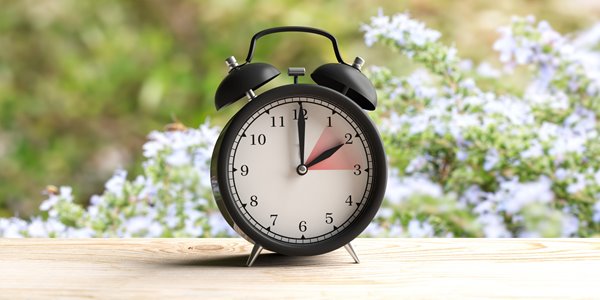
Daylight Saving Time Ended Week Ago; Changes Unhealthy, But Debate Over It Neverending Sunday

The annual changes back and forth from Daylight Savings 
Time and Eastern Standard Time negatively affects 
health, experts say
We're a week into the start of Eastern Standard Time, and frankly, I don't like it.  

Here in Vermont under Eastern Standard Time, the sun basically sets in the middle of the afternoon this time of year. Yeah, technically, the sun does't set in Vermont until a little before 4:30 p.m. this time of  year, and around 4:13 near the time of the winter solstice.

But this time of year is so dark and cloudy and dreary that the sun effectively sets much sooner than that. The gathering gloom starts around 3 p.m.  

On paper, you'd think I'd like Eastern Standard Time. I'm actually an early to bed early to rise kinda guy. The sun comes up in the morning a little earlier than it would during Daylight Savings Time. The sun would come up at around 8:25 a.m. under Daylight Savings Time. 

But I don't really mind waking up to darkness in the morning during the winter. It's not like I want to burst open the doors and enjoy the subzero cold on early winter mornings.  

 Apparently, though, my preference for Daylight Savings Time is bad for my health. Well, of course.! Anything that I enjoy or prefer is bad for me. I guess I should spend my life eating kale, which I detest, never having an alcoholic beverage, and never blowing off exercising for just one day. 

But as ABC and pretty much every news organization on the planet reported, daylight savings time would kill you and me. Or something. 

Says ABC:

"Daylight saving time is less aligned with our natural circadian rhythm. The sun rises later and lasts longer in the evening, but our bodies are more attuned to light in the mornings and darkness in the evenings."

When your circadian rhythm is off because of Daylight Saving Time, you tend to feel a little more tired in the morning and awake in the evening. That doesn't sound like such a big deal. 

Except:

Somehow, the twice annual change, especially when we turn the clocks ahead by an hour in March, it can lead to increased strokes, heart attacks and teen sleep deprivation, according to PBS News Hour.

Scientists say it would be better to make Eastern Standard Time permanent instead of Daylight Savings Time. For purely selfish reasons, I don't like it, because I love the long summer evenings that Daylight Savings Time provides. There's still twilight at 10 p.m. locally in June. 

Nevertheless, the U.S. Senate last March passed a bill that would make daylight savings time permanent. The name of the bill is a little obnoxious: The Sunshine Protection Act of 2021. Sorry, this isn't about protected the sun. It'll keep shining no matter what Congress says. 

Still, I like the idea. No fooling around with the clocks every autumn and early spring. Yay! It seems like I'm not the only person who prefers permanent Daylight Savings Time: 

As CNN opines: 

"Making daylight savings time permanent is broadly popular. A Monmouth University poll conducted in March showed that 61 percent of Americans would favor getting rid of our twice-annual clock changes. The survey also found that 44 percent of Americans prefer making daylight savings time permanent, while 13 percent (who are these people!) want to operate on standard time all year."

However, the U.S. House has yet to act on this idea. They haven't taken up the bill, and probably won't during the upcoming lame duck session in the late winter. It's just not a priority. 

It looks like we will be adjusting our clocks back and forth twice a year for the foreseeable future. 


Tuesday, April 5, 2022

Lake Champlain Lake Level Might Peak Early This Year, No Significant Flooding Expected

Relatively high lake levels on April 25, 2019, invading
wetlands near Alburgh, Vermont, as the lake should do
every spring. The cycle of high water each spring 
helps the ecosystem. 
 Lake Champlain might be nearing its peak level earlier than usual this year, depending, of course on whether the rest of this month proves unusually wet or not. 

Many of of us watch the Lake Champlain level each spring.  On the negative side, if the water gets too high, we have to worry about flooding. If it doesn't rise much, it could hurt the ecosystem in and around the lake, as many plants and animals depend upon natural high and low water cycles. 

As of yesterday, the lake level stood at 98.2 feet above sea level. As WPTZ meteorologist Ben Frechette pointed out today, that's actually a little higher than normal for this date. The lake on average peaks in the final days of April at around 98.5 feet. Flood stage is 100 feet.

If you look at the chart Frechette helpfully provided on Twitter today, the lake started rising sooner in the spring than normal, but at about the same rate at usually does. 

That reflects the early onset of mountain snow melt during our warmer than normal March. Much of the snow melted off the hills prematurely, so the lake level went up early.  The lake might start to recede early, too, if weather for the rest of the month is either normal or drier than average.

How high the lake gets this year depends on how much rain we receive.  Snow melt will soon start to s  get less and less important as there's just not all that much snow in the mountains left to melt.

The lake appeared to reach an early peak of 98.26 feet on Saturday, and then started a slight decline. That still seems high enough to keep the ecosystem happy. 

There's a good chance the lake will have at least one more burst of rising levels toward this weekend if current weather forecasts pan out. 

We have the potential for some fairly heavy rain on Thursday. Forecasters say the rain could be heavy enough to cause sharp rises on rivers, possibly even with some minor flooding. Since so many rivers feet into Lake Champlain, that storm, if it comes will lead to higher lake levels. It could even come close to 99 feet if there's a lot of rain late this week.

From there, the lake will start to recede again late next week, unless more wet storms arrive. 

Even if that storm hits Thursday, I don't think Lake Champlain will hit flood stage this year, unless we have some very heavy rain storms between now and mid-May.

At 100 feet, you start to see erosion problems on the shore, some roads covered in water, and maybe a few very low lying camps see flooding. At 101 feet, the flooding gets pretty serious, but I really doubt that will be a problem this year. 

You don't want the lake to get too high, though. Photo that
I took in 2011 shows record high Lake Champlain levels
destroying camps in Burlington, Vermont.  

The relatively high water we are seeing is a good thing, and it's even better if lake rises even a bit more this month. 

The ecosystem of Lake Champlain really depends on higher water each spring. 

The rise and fall of Lake Champlain in the spring helps ensure healthy wetlands which all kinds of plants and animals depend upon. 

The federal Environmental Protection Agency calls wetlands "biological supermarkets," which provide food for a wide variety of animal species. Lake Champlain has tons of wetlands along its edges, which helps the ecosystem throughout the Champlain Valley and beyond. So you want those wetlands to work the way they're supposed to.  

Of course, as we learned in 2011, too much water and snow melt are a really bad thing. That year, the lake shattered the record for its highest level ever seen, at 103.2 feet. The lake level in 2011 stayed above 102 feet for more than a month. 

The flood easily caused more than $6 million in damage. 

There is of course no way that flood will repeat itself this year. Instead, we should just enjoy the natural lake cycle, even if it is happening a little earlier than average.