Showing posts with label hurricane season. Show all posts

Tuesday, October 14, 2025

It's Been A Odd Tropical Storms, Hurricanes Season And The Weirdness Continues

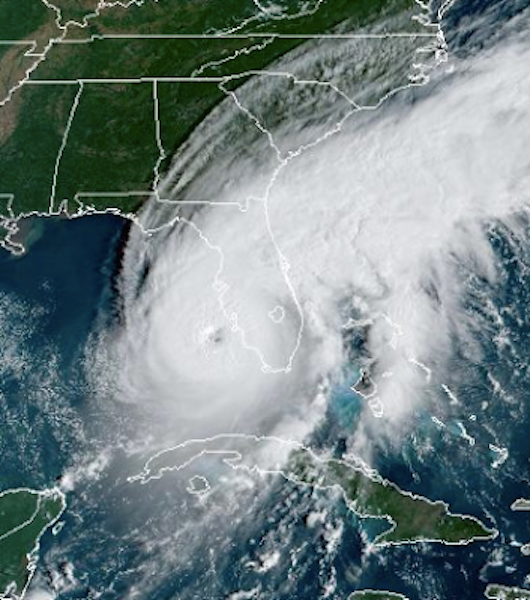
Powerful Hurricane Erin in the central Atlantic Ocean
back on August 16. It's been a really weird 
hurrican
We're nearing the end of Atlantic hurricane season, with just a month and a half to go before things should get safer for another year. 

There's still a chance that more hurricanes could form and even threaten the United States. 

But as it stands now, we're lucky. So far at least, this is the first year since 2015 without a hurricane striking the U.S. coastline.

We needed the break. 

That's not to say tropical storms and hurricanes haven't messed with the U.S.

Moisture from brief, weak tropical storm Barry was a key ingredient into the horrible, deadly Texas floods over the Fourth of July weekend. 

Also in July, Tropical Storm Chantal splashed ashore in South Carolina in July, causing flooding in the Carolinas.

And, offshore Hurricanes Erin, Gabrielle and Humberto sent waves slamming into the U.S. East Coast, sending nearly a Outer Banks, North Carolina dozen homes crashing into the ocean.

This has been a weird hurricane season. It's always been go big or go home. Tropical systems in the Atlantic have either been brief, weak nothingburgers or monsters.

The monsters have all taken a turn north far offshore of the United States. Had this weather pattern been 400 or 500 miles further west, the East Coast would have been raked by repeated strong hurricanes. 

It's been weirder in recent weeks than earlier in the season. We had the drama of Hurricanes Humberto and Imelda setting a record for Atlantic hurricanes being so close to each other. That led to a strange dance between the two storms that changed their directions, and alternately strengthened and weakened both. 

Then we had Tropical Storm Jerry. The disturbance that became Jerry emerged from the west coast of Africa more than a week ago, That's awfully late in the season for something like that to happen.

The African disturbances that can turn into powerful hurricanes usually shut down by the end of September. 

Forecasters originally had high hopes for this storm, figuring Jerry would turn into a decent sized hurricane. But, strong upper level winds keep tearing the storm apart. It stayed a weak tropical storm until it dissipated over the middle of the Atlantic Ocean this past weekend.  

Then we had little-noticed Subtropical Storm Karen. 

Subtropical Storm Karen formed last Thursday, strangely far north in the Atlantic Ocean, at 44.5 degrees north 33 degrees west. That's about the same latitude as Nova Scotia. That's the furthest north such a storm has formed in at least 150 years. 

Subtropical storms are hybrids of the warm core storms that are true tropical storms and regular old storms that have warm and cold fronts and such. 

The water was actually "too cold" to support a tropical or subtropical storm. But because of a pocket of cold air high overhead was such a contrast to the tepid waters below that we were able to get Subtropical Storm Karen. 

It was so far north that its life was a short one. It dissipated Saturday. 

Now we have Tropical Storm Lorenzo, which outdid Jerry for being an incredibly late season African-born storm. 

As of this morning, Lorenzo was struggling just like Jerry did. Stronger upper level winds and dry air are tearing Lorenzo apart. If the storm survives these troubles, it'll head slowly northward and the northeastward out in the middle of the Atlantic.  It won't bother anyone. 

Some models bring a tropical storm or hurricane to the Caribbean Sea or far eastern Gulf of Mexico in a couple weeks, but those long range predictions are notoriously unreliable. 

Saturday, August 30, 2025

Odd, But Welcome Quiet Labor Day Weekend Nationwide, Including Here In Vermont. Plus Welcome Rain

Shower clouds seen bubbling up in St. Albans, 
Vermont Friday. The rainfall wasn't much, about
a third of an inch, but we'll take anything we can get.
It's Labor Day weekend, and you want to get outside one last time for summer fun.

Nationwide, it's easy to do this year, as the weather is unusually quiet.  It's rather cool in parts of the eastern half of the nation. I don't know how beach time would work under these chilly breezes.  

But there's not much in the way of big storms or extreme heat waves, or anything like that. 

First of all, there's no hurricanes to be found anywhere in the Atlantic Ocean. That's strange for the Labor Day weekend. We're nearing the peak of hurricane season, and there's almost always something lurking out there this time of year. 

On many Labor Day weekends, some part of the U.S. coast is getting hit by a hurricane, is being threatened by one or is just beginning to recover from a hit. Not this year. 

The only thing out there is a disturbance coming off the west coast of Africa. There is some chance it could develop into a tropical storm in a few days. But this thing won't become a threat to anybody for several days, and might not amount to anything at all.

Also, no big outbreaks of severe thunderstorms are in the works this weekend anywhere in the U.S. There could be a few bad storms here and there in the Plains states through the weekend, but any strong storms would be few and far between. 

We do have one weather problem going on, though. This has been the summer of flash floods in the United States, and that is continuing into the Labor Day weekend. 

There has been flash flooding over the past day or two in the Sierra Nevada mountains of California, and in parts of New Mexico, Kansas and Arkansas. 

More flash flooding could occur in Texas, New Mexico and the central Plains today and tomorrow.

A heat wave that broke record high temperatures in the West has faded for now, though the heat is continuing in British Columbia, Canada. 

The eastern half of the U.S. is mostly cool for the season today, but a warming trend is starting so the it will be pleasant enough in most places in the East through the weekend

VERMONT WEEKEND

Some places in Vermont got some needed rain Friday. A few spots received as much or even more rain yesterday than they'd gotten all month. 

Through Thursday, Montpelier had only 0.34 inches of rain in August. Friday, they got 0.28, almost doubling the meager amount so far this month. 

A few places in western Vermont and over in New York received over a half inch of rain. But most places, like Burlington and here in St. Albans, had only about a third of an inch of precipitation Friday. 

Southern Vermont missed out again.  Bennington reported just 0.12 inches rain. Springfield logged just 0.02

For places south of Route 4, those sprinkles were the last rain they'll see until at least Thursday. So the drought will keep worsening there as we have another spell of dry, warm weather. 

In the north, a large area of mostly light showers, with some embedded spots of moderate rain, was moving into northern Vermont this morning as activity rotates around a pool of upper level cool air just to our north over southern Quebec.  

The rain won't amount to much. Maybe most towns north of Route 2 could see a few hundredth of an inch of rain. The clouds and rain will keep things cool across the north, as highs only reach the 60s. 

Southern Vermont should stay at least partly sunny, with highs near 70.

For the rest of the weekend, both Sunday and Monday, we'll see sunshine and comfortable temperatures both days to bring summer to an unofficial close. 

Tuesday, November 19, 2024

UPDATE: Tropical Storm Sara Thankfully Dies, Leaves A Flooded Honduras Behind

Damage in Honduras from now-departed Tropical
Storm Sara, which dissipated this past weekend.
 Tropical Storm Sara, having tortured Honduras for several days with torrential rains and flooding, finally moved inland over Belize and the southern Yucatan Peninsula of Mexico over the weekend and died away. 

Good riddance

It left behind widespread flooding in Honduras, with reports of up to 40 inches of rain. So far, I'm grateful to report only two deaths, which seems surprisingly and happily low for a storm of this magnitude

At last check, reports from Honduras indicate 11 bridges, 226 homes and 252 streets and roadways destroyed.  More than 7600 people have been rescued.  

Some forecasts last week suggested Sara would re-emerge over the Gulf of Mexico, head east and becomc a threat to Florida.

The remnants of Sara might end up in Florida this week as a patch of briefly heavy rain, but that's about it. Nothng to worry about. 

One weird aspect of this is the remnants might ended up heading south to below Jamaica in the Caribbean, which is where this thing all started in the first place. But there's very little chance - if any - that the Sara remnants would regenerate.

Sara will probably - but not definitely - be the last tropical storm of the busy 2024 season. The Atlantic hurricane season ends on November 30, though a few tropical and subtropical storms and even hurricanes have been known to form in December.

However, the National Hurricane Center as of this morning is forecasting no tropical storm development for at least the next seven days. 


Friday, November 8, 2024

Resilient Hurricane Rafael Continues To Surprise Forecasters, But No Further Threat To People

Hurricane Rafael stayed surprisingly strong over
the Gulf of Mexico yesterday and last night,
as you can tell by this visible satellite image of 
the storm taken at around sunset Thursday. 
 Contradicting all forecasts, Hurricane Rafael in the Gulf of Mexico continued to power up yesterday and at least part of last night, with highest sustained winds of 120 mph. 

That's the most powerful Rafael has been since it first ramped up several days ago. 

A weakening trend should have started by now, given dry air over the Gulf and what had been expected to be increasing upper level winds that would want to tear a hurricane apart  But like so many hurricanes this year, Rafael is over-performing.

The upper level winds haven't materialized quite yet, and the water Rafael is moving over is quite warm, so the storm has enough nourishment to preserve its strength for now. 

This is only the third time on record that a hurricane of at least Category 2 strength or more has been in the Gulf of Mexico during November. 

Unlike other powerful hurricanes that emerged from the Gulf of Mexico this year - Beryl, Debby, Helene and Milton - Hurricane Rafael doesn't look like it will cause a lot more damage in the United States, if any. 

Moisture streaming north from Rafael did help cause a rather destructive flood in parts of Georgia and South Carolina this week. Up to 15 inches of rain fell on central South Carolina, prompting extensive flooding, especially in and around Orangeburg. 

Those upper level winds and dry air should finally team up starting tonight to begin slowly dismantling Hurricane Rafael. It will move westward through the central Gulf of Mexico for the next couple of days, then sort of start meandering offshore as it gradually fades. 

It might never come ashore anywhere again. Still, since this hurricane - and several others this year - have been so surprising, we can't take our eye off Rafael, just in case.

Most of the havoc created by Rafael occurred when it past over the western side of Cuba Wednesday. It caused the kind of flooding and building damage you'd expect from a Category 3 hurricane.

Worse, as you might have seen in the news, Cuba's power grid is unstable, to put it mildly. They had two nationwide power failures this autumn already. Rafael caused a third collapse of the nation's power grid, putting the entire island in darkness. That includes the central and eastern part of Cuba, which suffered no direct effects from Rafael.

The Washington Post tells us the power is back on in eastern Cuba, but was still out at last report in the west, including in the Capital Havana. 

Up on the U.S. Gulf Coast, the only hazards expected from Rafael so far are dangerous rip tides and possibly some minor coastal flooding. 


Wednesday, November 6, 2024

Hurricane Rafael Turns Out To Be Another Over-Performer, Indirect Effects Flooding Georgia

Visible satellite view of Hurricane Rafael bearing down
on western Cuba today. It'll cause big trouble in
Cuba, but the storm's future is uncertain after that. 
 Late season Hurricane Rafael is now bearing down on western Cuba, and like several other storms in this weird hurricane season, Rafael is turning out to be an over-performer. 

Top sustained winds with Rafael had increased to 110 mph by late this morning,  and were expected to increase further by the time it reaches landfall in western Cuba later today.   

Rafael rapidly strengthened overnight, a habit of several hurricanes this year. Think Beryl, Helene, Milton as examples. 

Water in the western Caribbean Sea is unusually warm, even by their standards, probably thanks in part to climate change. So we have another strong one. 

Rafael will probably be what is considered a major hurricane later today, which is one with sustained winds of 111 mph or higher.

Rafael will weaken slightly as it passes over Cuba, but will still be a pretty impressive hurricane once it emerges into the Gulf of Mexico.

From there, the future of Rafael gets more uncertain, but the trends might well be good for the United States.

I think.

Originally, Rafael the thinking among many forecasters is that Rafael would continue to head north while weakening over dry air and increasing upper level winds. That would make Rafael a "mere" tropical storm at landfall in the United States.

Troublesome, but not another Helene or Milton.

The forecast now is shifting. Forecasters had wondered for days if a strong ridge of high pressure to the north would steer Rafael westward, and that's looking more likely.  That would put Rafael over warmer water and less disruptive upper level winds than if it headed north. The result is Rafael would last longer as a hurricane and only slowly weaken.

But it would also avoid a United States landfall. 

The future of Rafael beyond about Friday is really uncertain. Hopefully, it will die a slow death over the western Gulf of Mexico, but we don't really know that for sure yet. 

GEORGIA

Well to the northeast of Rafael, we have another heavy rain and flood situation, this time in parts of Georgia and South Carolina. 

You might remember in the couple of days leading up to Hurricane Helene, torrential rains fell in western North Carolina.  So when the torrents with the actual hurricane hit that region, cataclysmic, deadly floods resulted.

The rains before Helene up in North Carolina were known as a Predecessor Rain Event, or PRE.  These heavy rains often set up hundreds of miles north of a hurricane, and can themselves cause serious flooding. 

Or, they can set the stage for catastrophic flooding when the hurricane actually arrives, like in the case of Helene.

This time, a sort of PRE event is setting up in Georgia. Moisture streaming north from Hurricane Rafael is starting to pool in Georgia, which should unleash torrential rains today and tonight. 

A good six inches or more of rain could fell across central Georgia and southwestern South Carolina through tonight. It actually hasn't rained much down there lately, and you'd think that would limit the flooding a bit.

But the dryness has made the hard Georgia clay even harder, so the water will run off more easily into creeks and rivers, raising the flash flood risk.

The great news is that Hurricane Rafael, as noted, is not heading toward anything close to Georgia. So this won't be a case of a flood made exponentially worse by an arriving hurricane, since such a storm isn't heading toward the Southeast. 

Sunday, October 6, 2024

Early Sunday Evening Hurricane Milton Update: YIKES!

Satellite view of rapidly intensifying Hurricane Milton
late this afternoon in the southwestern Gulf of Mexico.
Hurricane Milton was rapidly intensifying over the southwestern Gulf of Mexico, heading generally east on a dreaded crash course with Florida. 

Top winds were 85 mph in Milton late this afternoon, up from 60 mph just this morning. 

MONSTER FORMING

Veteran hurricane watchers are awed by how fast Milton seems to be gaining power. In their late afternoon forecast discussion, a National Hurricane Center meteorologist wrote:

"Intensity guidance is about as bullish as I've seen in this part of the basin, with almost everything showing a peak intensity of category 4 or 5 in the southern Gulf of Mexico in a day or two."

So much for forecasts a few days ago that hinted at only a weak tropical storm in the Gulf of Mexico.

Most of that same forecast guidance shows upper level winds abruptly increasing over Hurricane Milton as it approaches the Florida west coast on Wednesday. That should trigger a noticeable weakening trend, which might sound like good news.

It isn't. 

That weakening trend if it develops looks to be too little too late. Sure, wind speeds might decline to a Category 3 at landfall, but that's still bad. Also, a category 4 (130 to 156 mph) or 5 (winds 157 mph or higher) storm triggers an immense storm surge that doesn't just go away as soon as the hurricane begins to weaken. 

I've got a horrible for instance here. Hurricane Katrina in 2005 was a category 5 hurricane in the Gulf of Mexico but was "only" a category 3 at landfall in Louisiana. As you might remember, the storm surge basically destroyed all of New Orleans and surrounding areas. At least 1,880 people died, and Katrina is still considered easily among the worst in U.S. history.

Now, I'm not saying Milton will be another Katrina. For one thing, Katrina was larger in size than Milton, so it was able to generate a bigger storm surge. We also don't know exactly where in Florida Milton will hit.  If we're lucky and it hits a relatively low population area in which people had fled, then the death toll would be pushed lower. 

We can only hope. 

Then again, when a super powerful hurricane begins to weaken, it often expands in size. That would make Milton rake more real estate in Florida with high winds, storm surges and flooding than a smaller system would.

Forecasters still don't know exactly where in Florida Milton will make landfall. The thinking is central Florida a little south of Tampa. But the "cone of uncertainty" this evening - the areas where the National Hurricane Center think it could come ashore - extends from near Cedar Key in northwestern Florida near where Helene came ashore - to a point in far southwestern Florida that's about as far south as Miami. 

MILTON IN PERSPECTIVE

Florida officials urge everybody in and near the cone of uncertainty to prepare now through Tuesday. Wednesday will be too late.  Gov. Ron DeSantis said today he pretty much guarantees people in low lying coastal areas along the Gulf Coast will be told to get out. 

It's been a weird, bad hurricane season. 

Forecasters in the spring said there would be an insane number of hurricanes this year. But there was a long period in August and September when there were very few storms. 

A rare sight in the Atlantic Ocean, especially in October.
Three hurricanes are simultaneously spinning out there. 

Now things seem to be making up for lost time. There are currently three full-fledged hurricanes in the Atlantic Ocean - Kirk, Leslie and Milton. This is the first time on record there have been three simultaneous hurricanes in the Atlantic in October. 

There have been a couple of occasions when there were four simultaneous hurricanes, but those cases all occurred in August or September, which is the peak of the tropical storm season. Also, before the satellite era, it's possible additional October hurricanes could have been missed.

Still, it's busy out there. Thankfully Kirk and Leslie are no threats to the United States.

As it is, FEMA already has its hands full from Hurricane Helene.

Per the Associated Press:

"Federal disaster assistance has surpassed $137 million since Helene struck more than a week ago, one of the largest mobilizations of personnel and resources in recent history, FEMA said Sunday.

Some 1,500 active-duty troops, more than 6,100 National Guardsmen and nearly 7,000 federal workers have been deployed, shipping more tham 14.9 million meals, 13.9 million liters of water, 157 generators and 505,000 tarps, along with approving more than $30 million in  housing and other types of assistance for over 27,000 households, according to FEMA, the White House and the Department of Defense."

It's not like this big push to help Helene victims can be put on the back burner - that has to keep going. Which raises questions over whether FEMA will be stretched way too thin dealing with Milton and its likely horrendous aftermath. 

FEMA officials say they are already planning and staging for Milton, so let's see how that goes.  

Wednesday, June 19, 2024

First Tropical Storm Of The Season Inundates Texas, Mexico Coasts

Tropical Storm Alberto forming large messy swirl in
the western Gulf of Mexico Wednesday afternoon. 
 We finally have our first named tropical storm in what is widely predicted to be a very busy Atlantic season.  

Tropical Storm Alberto officially formed late this morning in the midst of this huge swirl of storminess in the southern Gulf of Mexico.

Its wind power is modest. Top sustained winds are about 40 mph. Those winds will probably increase only slowly before Alberto splashes ashore in northeastern Mexico early tomorrow morning.

However, Alberto is causing a lot of coastal flooding in Mexico, Texas and Louisiana. 

Size matters. Alberto itself is just part of that huge whirl of storminess in the Gulf. That's pushing water eastward and northeastward into northeast Mexico, Texas and parts of Louisiana.

 As a result, tropical storm and coastal flood warnings extend all the way up to Galveston, not far from Houston. That coastal flooding extends all the way to along the entire Louisiana coast. 

The storm surge in Texas might actually end up being worse than in Mexico, near where the center comes ashore. Video shows quite a lot of flooding in Surfside Beach, Texas and a number of other coastal resort towns.

Rainfall with this thing is serious, too. Five to 10 inches of rain could fall in southern Texas and up to 20 inches in the mountainous areas of northeast Mexico.  Needless to say, inland flooding is a big risk

Even after Alberto goes inland and dies Thursday, a swirl of storminess will remain in the southwestern Gulf of Mexico. Next week, that swirl could spit out another tropical storm, much like Alberto.  That's uncertainty, but forecasters are looking at that risk. 

Another disturbance northeast of the Bahamas is expected to move westward toward Florida or the southeast Coast.  Forecasters give that thing a low but not zero chance of turning into a tropical storm before hitting the coast. 

Thursday, May 23, 2024

Piling On, NOAA Also Says Hurricane Season To Be Nuts

We've listened to a parade of forecasters all this spring say the upcoming Atlantic hurricane season is going to be gonzo crazy. 

Hurricane Ian menacing Florida in 2021.  NOAA
Thursday joined the chorus of forecasters 
expecting an extremely busy hurricane season. 

Now, a week before the official start of the hurricane season, NOAA's Climate Prediction Center is also remarkably confident this hurricane season is one to worry about. 

They give 2024 an 85 percent chance of being busier than average, a 10 percent chance of being pretty normal, and a 5 percent chance that it will be quieter than usual. 

NOAA and National Weather Service meteorologists and hurricane experts rarely give such a confident forecast for an entire storm season. This is the highest confidence forecast NOAA has ever issued in a May outlook, said NOAA Director Rick Spinrad. 

Their forecast calls for 17 to 25 named storms - which are tropical storms and hurricanes with at least 39 mph winds. They call for 8 to 13 hurricanes - winds of at least 74 mph; and four to seven major hurricanes, which have 111 mph winds or higher. 

The average for a season is 14 named storms, seven hurricanes and three major hurricanes. 

Says NOAA:

"The upcoming Atlantic hurricane season is expected to have above-normal activity due to a confluence of factors, including near-record warm ocean temperatures in the Atlantic Ocean, development of La Nina conditions in the Pacific, reduced Atlantic trade winds and less wind shear, all of which tend to favor tropical storm formation."

Forecasters also expect more than the usual number of disturbances moving westward off the African coast into the Atlantic Ocean. These disturbances often form into tropical storms and hurricanes. 

It's rare to have this many factors come together to favor tropical storms, which seems to be giving NOAA that ominous forecast confidence. 

NOAA's forecast is virtually the same as other forecasts from numerous other sources this spring. A closely watched Colorado State University hurricane forecast issued in April predicts 23 named storms, and at least 11 hurricanes. 

NOAA's hurricane forecast, and that of most other forecasters, would bring us close to the record for the busiest season. That was in 2020, when there were 30 named storms.  That year,  the entire United States Atlantic Coast from Brownsville, Texas to Eastport, Maine was under some sort of hurricane or tropical storm warning at one time or another. 

Hurricane season runs from June 1 to November 30 but tropical storms can sometimes form before and after that timeframe. As of this morning there was a disturbance near Hispaniola that hurricane forecasters are watching, but as of today they doubt it will amount to anything.  

What will matter most this year, like every year,  is where hurricanes go once they've formed. The sheer number of storms expected this year makes the chances of one or more hitting the United States greater than it otherwise would be.

Still, the best scenario would be for hurricanes to curve northward well before reaching the United States. That was generally, but not exclusively the pattern last year. 

This year, our luck might run out. I've seen a few forecasts that would favor more westward paths that would bring hurricanes closer to the East or Gulf coasts. 

Up here in Vermont, we're too far inland to have much of a risk from a direct hit from a major hurricane. The last time that happened was in 1938.

However, the Green Mountain State is very much at risk from heavy rains and serious flooding if a dying hurricane or its remnants pass overhead or nearby. 

The last tropical storm to hit us was former Hurricane Isaias on August 4, 2020 which was still a tropical storm on its path from roughly Albany, New York to Rutland, then Newport, Vermont.  Two to four inches of rain fell in western Vermont during that episode, but a drought that preceded Isaias prevented much flooding. 

Winds of up to 50 mph caused power outages in eastern Vermont. 

However, we're rarely not so lucky in those circumstances. We all remember the epic floods from Tropical Storm Irene in 2011. We also suffered from quite a bit of flooding and wind damage in Tropical Storm Floyd in 1999.

After the floods of last summer, which were not caused by any tropical storms, we don't need a disaster like that a second year in a row. Hopefully the hurricanes and tropical storms we're expecting this year stay far from Vermont. 


Thursday, June 1, 2023

Right On Schedule Possible Gulf Of Mexico Tropical Storm Looms

UPDATE 2 PM FRIDAY

Satellite view this afternoon of what could become
Tropical Storm Arlene. Today's the officials start of the
Atlantic hurricane season, so good timing. 
This struggling storm has been upgraded this afternoon and is now officially Tropical Storm Arlene.

It's not a big thing, with top winds of 40 mph. That's barely tropical storm strength. 

As forecast, it's headed south through the eastern Gulf of Mexico.

High winds aloft and dry air poking into Arlene's circulations should make this tropical storm short-lived.

Already, the storm is poised to fall apart. Its thunderstorms are displaced to the northeast of the center, which is just a swirl of low clouds.

As upper level winds get stronger later today and tonight, the storm will get blown apart. 

PREVIOUS DISCUSSION

The National Hurricane Center this afternoon is watching a developing system in the northeastern Gulf of Mexico that could become the seasons's first Atlantic tropical storm.

If it does develop into one, it means the season is getting off to a prompt start.   The Atlantic hurricane season official runs from today, June 1, through November 30, though you can occasionally have tropical storms before or after those dates. 

It is kind of unusual, but not way out of whack to see a tropical storm form on the first day of hurricane season.   The National Hurricane Center says this one has a 70 percent chance of becoming a tropical storm or depression, so there's no guarantee.

But those chances have really ramped up since early this morning, when the NHC was saying the cluster of thunderstorms only had a 20 percent chance of growing into a tropical storm. 

As of mid-afternoon, the system didn't look super impressive on satellite, but you'd have to expect that with a disorganized, wannabe storm. But you can see telltale signs of a circulation, and thunderstorms mostly north and east of the center seem to be getting better organized.

If this turns into a tropical storm, they'll name it Arlene.  If Wannabe Arlene does become a tropical storm, forecasters don't expect it to last long.  It'll meander over the northeastern Gulf of Mexico tonight, and then head slowly southbound on Friday. 

Again if it officially Arlene, the National Hurricane Center doesn't expect it to last long. Strong upper level winds should start to screw up the storm's circulation starting on Friday. 

Strong upper level winds are common this early in the hurricane season, so that's no surprise. Plus, an El Nino pattern has developed. That, too, can cause stronger upper level winds that nip would-be hurricanes in the bud.

The Gulf of Mexico waters are unusually warm for this time of year, so that's probably helping to give this system a boost toward tropical storm status. 

The center of Arlene, or whatever this thing will eventually become, should stay offshore, but could still produce heavy rains and possible flooding in Florida over the upcoming weekend. 

Monday, April 24, 2023

There Will Never Be Another Hurricane Ian Or Fiona

Damage from Hurricane Ian in Florida. Usually, the same
hurricane names are rotated through every six years, unless one
particular storm is super bad. Then the name is retired. 
So because of their power, there won't be another
Hurricane Ian or Hurricane Fiona. 
 The Powers That Be who name hurricanes rotate the same names every six years.

That is, unless a hurricane is so destructive and deadly that it is seared on the minds of its victims.  

So, say goodbye to any chance of another Hurricane Ian or Hurricane Fiona.   In the future, say hello to hurricanes Farrah and Idris. Hurricanes Ian and Fiona in 2022 definitely left their marks, and it's no wonder their names are being retired.

Hurricane Ian trashed Florida, and was one on of the costliest hurricanes on record for the United States. 

The long track of Hurricane Fiona caused a lot of damage in Puerto Rico before making a turn north and making a long journey to Nova Scotia and Newfoundland, Canada, unleashing perhaps the worst hurricane disaster in Canadian history. 

The World Meteorological Organization, which is in charge of hurricane names, has retired 94 names overall. A committee then comes up with replacement names

As the Washington Post reports: 

"The storm names come from a WMO committee composed of meteorology and hydrology experts from North America, Central America and the Caribbean. Official storm naming began in 1953 to ease communication around storm warnings and thus protect lives and property from life-threatening conditions."

As an aside, the entire planet is probably grateful I'm not in charge of naming hurricanes. I'd probably come up with names like Kudlow,  Beezle, Monkton, Tootsie or Skunk.  But I digress. 

For some reason, hurricanes that begin with the letter "I" are the most likely to be retired. Ian is the 13th "I" hurricane to have its name retired. The others are Ione in 1955, Inez in 1966k Iris in 2001, Isidore in 2002, Isabel in 2003, Ivan in 2004k Ike in 2008, Igor in 2010, Irene in 2011, Ingrid in 2013 Irma in 2017 and Ida in 2021.

Speaking of Hurricane Ian, the National Hurricane Center last month came out with a detailed analysis of that storm. The NHC issues final reports on most hurricanes months after they happen to share knowledge gained, lessons learned, etc. These reports also offer revisions to statistics about the hurricanes. 

In the case of Ian, the National Hurricane Center has upgraded Ian's peak strength from Category 4 to Category 5 when it was just off the coast of western Florida. Category 5 is the strongest strength ranking a hurricane can attain. Such storms have sustained winds of at least 157 mph. 

Winds were as high as 160 mph during Ian's peak.  The storm "weakened," if you can call it that, by the time it reached land in Florida, with top winds of "only" 150 mph. 

Experts are hoping hurricane season 2023 will be less intense than in recent years. An El Nino, which creates warmer water in the Pacific Ocean west of South America is developing. El Ninos tend to limit hurricanes in the Atlantic Ocean. 

Limit, but not eliminate. It only takes one to really raise havoc, unfortunately. 


Wednesday, May 25, 2022

NOAA Agree: Hurricane Season To Be Busy Again This Year

Hurricane Ida on approach to Louisiana last year. 
NOAA is predicting yet another busy 
hurricane season for 2022.
 NOAA weighed in with their seasonal hurricane forecast for this year, and they agree with pretty much everyone else: We're in for another busy hurricane season.  

NOAA does this in percent chances.  They tell  us there's a 65 percent chance of a busy season, a 25 percent chance of near normal activity and only a 10 percent chance we'll have fewer than average tropical systems this year. 

If this hurricane season is busier than usual, it will be the seventh such season in a row. 

Like all hurricane forecasts, NOAA doesn't really get into how many of these storms will hit the U.S. coast. That's awfully hard to predict until you have an actual hurricane out there to track. But it's all a matter of chances.

The more tropical storms and hurricanes you have buzzing around out there, the greater the chance at least a couple of them would splash ashore in the United States.

Here are a few more details from NOAA:

"For the 2022 hurricane season, NOAA is forecasting a likely range of 14 to 21 named storms (wind of 39 mph or higher), of which 6 to 10 could become hurricanes (winds of 74 mph or higher), including 3 to 6 major hurricanes (category 3,4 or 5; with winds of 111 mph or higher). NOAA provides these range s with a 70 percent confidence."

Reasons for the expected busy hurricane season include the following:

La Nina: A periodic cooling of the eastern Pacific Ocean is continuing this year. This tends to weaken upper level winds over the Atlantic Ocean.  With these weaker winds, clusters of thunderstorms that want to be tropical storms stand less chance of getting blown apart before gaining momentum into an organized hurricane

Water Temperatures: Water temperatures in much of the Atlantic Ocean, Caribbean and Gulf of Mexico are above normal.  The warmer the water, the more fuel for wannabe tropical storms. 

African Monsoon: Central and western Africa are subject to a series of wet storm systems during their seasonal monsoon in the summer and early autumn.  These disturbances move off the west coast of Africa and can become hurricanes. This monsoon activity is forecast to be above normal this year.  

Climate Change: The exact role climate change has with hurricanes is still being studied. But some indications are that the warmer ocean waters can contribute to more such storms. The warmer water might also enable hurricanes to form further north than in the past. 

Or, hurricanes coming in from the south will be able to maintain their strength longer as they move over what used to be cold water, but is now warmer due to a changing climate. 

Hurricanes are not just a coastal problem. They can
cause catastrophic flooding well inland after their winds 
have died down.  This is a Vermont house destroyed
by Hurricane Irene's flooding in 2011.

NOAA's hurricane forecast is consistent with other forecasts. The closely watched Colorado State University hurricane forecast, for instance calls for 19 named storms, against an average of 14.4 such storms each year.

The Colorado State University forecast also predicts four major hurricanes this year, in line with NOAA's estimate.

Keep in mind that if a hurricane smacks into a distant coastline, it can still be your problem. We saw a classic example of that last year after Hurricane Ida slammed into Louisiana. A few days later, its remnants unleashed catastrophic flooding in New York City, New Jersey and some surrounding areas.

Winds with hurricanes die out pretty quickly once they reach shore. The torrential rains can last a lot longer. Climate change gives that a boost because warmer air can hold more tropical moisture than cooler air. Which can make the remnant downpours from hurricanes that much worse. 

Hurricane season for the Atlantic Ocean starts June 1 and continues through November. You can see tropical storms outside that season, but they are relatively rare. At the moment, there's no signs of any tropical systems trying to form. Give it time, they will. 

Saturday, May 22, 2021

August In May: 90 Degree Vermont Heat, Subtropical Storm, Western Wildfires

Subtropical Storm Ana spinning northeast of Bermuda
this morning. It's the seventh year in a row with a 
pre-season tropical system in the Atlantic
 Typically in August, we get bouts of near 90 degree heat here in Vermont.  August is also the time of year we keep a close eye on the tropics for potential tropical storms and hurricanes. Late summer is also when wildfires really start to blossom out West.  

All this is happening now, which is really weird for this time of year. Welcome to August in May. 

Here in Vermont, Burlington reached 90 degrees Friday for the second day in a row. It wasn't quite a record high, but still impressive for this time of year. 

Montpelier did manage a record high for the date on Friday. It got up to 89 degrees, besting the old record of 86 degrees set in 1977.

It'll be quite warm again today, but not quite as toasty as the past two days.  There's increased cloud cover, so that will hold temperatures down a bit.  

Still, most of us should make it into the 80s this afternoon. There will be a few hit and miss showers and rumbles of thunder today, but most of us will stay dry. 

A pretty strong cold front tomorrow will flush out the hot air and return us to seasonable conditions for a couple days anyway. A small percentage of Sunday's storms might reach severe limits with gusty winds, especially in southern and eastern Vermont, and over in New Hampshire, Maine and southern New England. 

More heat might briefly return to Vermont midweek.

But our August in May theme goes on elsewhere. The official tropical storm and hurricane season doesn't begin until June 1, but there's already a subtropical storm out there. 

Subtropical Storm Ana formed overnight northeast of Bermuda.  It's considered subtropical because it has characteristics of both a tropical storm and a regular old storm. Still, a subtropical storm is unusual in May.

Less unusual than in the past, though.  Every once in while, a tropical or subtropical storm would form in the Atlantic, but it was rare.  But with Ana forming overnight, this is now the seventh consecutive year a tropical or subtropical storm has formed in May over the Atlantic.

This particular subtropical storm is no real threat.  It won't strengthen much beyond its current 45 mph top winds, and should dissipate in the next couple of days. 

Another system that threatened to form into another tropical storm overnight in the Gulf of Mexico failed to get its act together. Still, this wannabe system will spread unwanted, heavy downpours into flooded eastern Texas.

Flooding sure isn't the problem out West.  As of earlier this month, 18 square miles of California had already burned so far this year.  That's ahead of the pace of last year, which turned out to be the worst wildfire season in that state's history. 

Multiple wildfires have already broken out in Arizona, well before the peak of their usual fire season. 

All of this strange May weather I described above might be the main feature, and not bugs of the rest of the summer and early fall. 

Long range forecasts are often unreliable but for what it's worth, the Climate Prediction Center forecasts a hotter than normal summer for most of the United States, including here in Vermont and the rest of New England. 

Also, most experts expect a busier than normal 2021 Atlantic hurricane season, though it won't be as extreme and hectic as the record season last year.

And, with drought widespread across the western third of the United States, the wildfire season out there is sure to be a humdinger, perhaps on par with last year's devastating season. 

The month of May doesn't always hold clues as to what the rest of the summer will bring, but warning signs do seem to be flashing toward a very interesting summer in the weather department. 


Saturday, March 6, 2021

Hurricane Season Starting May 15

Tropical Storm Arthur just off the Southeast
U.S coast on May 18, 2020.
 The official start of hurricane season in the Atlantic has long been June 1.  

That's about the time the tropical Atlantic Ocean is warm enough, and atmospheric conditions are good enough, so that tropical storms can form. 

Trouble is, tropical storms have defied the calendar and have developed in May for the last six years in a row. 

Last year, two tropical storms formed during the second half of May in the Atlantic Ocean. In the past 50 years or so, there have been 19 named tropical storms or hurricanes in the Atlantic before June 1. 

That has the National Oceanic and Atmospheric Administration (NOAA) thinking about just changing the calendar to accommodate the trend toward more May storms.   

The National Hurricane Center always gears up to track and warn people of tropical storms even if they do happen before June 1.  But changing the calendar might focus more of the public's attention on the danger

As USA Today reports:

"Although the majority of the recent May storms have been rather benign, some have not. 'At least 20 deaths have occurred from late May storms since 2012, with about $200 million in total damage and one of these systems was a 60-knot (70 mph) tropical storm at landfall, according to the World Meteorological Organization (WMO)."

USA Today quotes Colorado State University Researcher Phil Klotzbach, who sees a potential downside to moving up the start of hurricane season.  Early season storms during a period extending well into July, tend to be weak and relatively infrequent, not like the monsters common in August and September. 

"If you extend the season another 15 days, you could basically have three months with very little storm activity...People can only prepare for things for so long before they just say 'forget it,'" Klotzbach said.  

 There's probably two reasons why there might be a trend toward earlier season tropical storms. Climate change is making oceans warmer, and tropical systems need warmer water to grow and thrive. Perhaps more importantly, satellite data is much better than in the past and enables meteorologists to spot new or small or brief tropical storms that wouldn't have been detected years ago.

Hurricane season will officially start on June 1 this year.  Any changes will start in 2022 or later. 

Tuesday, November 17, 2020

Waiting For The Terrible News After Hurricane Iota Strikes Nicaragua

Hurricane Iota as a Category 5 yesterday bearing 
down on Nicaragua
 Hurricane Iota slammed into Nicaragua last night with sustained winds of 155 mph, with surely devastating results.  

It had "weakened" from top wind Category 5 wind speeds of 160 mph while the storm was just offshore, but of course that 5 mph decline made absolutely no difference in the devastation. 

Hurricane Iota came ashore just 15 miles from where Category 4 Hurricane Eta hit two weeks ago. Which means the same area was devastated by Category 4 hurricanes in the same month.  The trauma for the people who live in that area must be just awful. 

We don't have details of what exactly is happening in that storm, as it's still raging. Hurricane Iota is smacking into the mountainous terrain in Nicaragua, which means its winds will die down very quickly and mercifully today.

But Iota has to rain itself out in these mountains, already super saturated by Eta.  As a result, the flash flooding and mud slides will be immense, with up to 30 inches of rain expected.

The only saving grace with Iota is it will die over the Nicaraguan mountains.  That's in contrast to Hurricane Eta, which bounced off the mountains back into the southern Gulf of Mexico. Eta then went on to cause extensive flooding days later in Cuba and Florida. 

Not happening this time. 

There's some weird stuff going on with this year's hurricane season. This is the busiest one on record, as we've already established, with 30 named storms.  Believe it or not, there's a chance of another tropical storm next week in the western Caribbean Sea. 

Hurricane Iota was the strongest hurricane of the 2020 season. That's especially strange since the strongest hurricane of any season (usually, but not always) hits near the peak of the season in late August or September. 

Like several hurricanes this season - such as Laura, Delta and Eta - Iota strengthened very rapidly from not much to a monster in a matter of a day or two.  In fact, looking at records that date back roughly a century,  three of the 11 hurricanes in the Atlantic that have strengthened the quickest have occurred in the past month. (That's Delta, Eta and Iota).

Iota was also obviously the strongest November hurricane to strike Nicaragua. The previous record was set by Hurricane Eta a couple weeks ago. 

Many factors contributed to this year's busy and tragic hurricane season.  One important factor was high sea surface temperatures. Those warm waters were made toastier in part due to climate change, so there's certainly evidence that climate change might have made this year's hurricane death and damage toll worse than it otherwise would have been.