Showing posts with label April. Show all posts

Thursday, May 22, 2025

April Was World's Second Warmest, Continuing This Year's Hot Trend

Another hot month in April. As has been the case
in recent years and will be for the foreseeable 
future, we'll see a continuing trend of
warmer and warmer global temperatures. 
April, 2025 was the world's second warmest on record
Granted, I'm late to the party with this, but the figures are in and to nobody's surprise, the world has its second hottest April on record.

According to the National Centers for Environmental Information:  

"Globally, the April, 2025 temperature was 1.22 degrees C (2.20 degrees F) higher than the 20th century average. This was the second-warmest April in NOAA's 176-year record and only 0.07 degrees C cooler than the record warm April of 2024.  

Notably the ten warmest Aprils on record have all occurred since 2010, with nine occurring since 2016, April 2025 also marked the 49th consecutive April with about average global temperatures,"

As usual, there were plenty of hot spots around the world.  The warmest spots relative to average were much of the Arctic, most of Asia, parts of Antarctica, the southeastern U.S., the British Isles, Indian Ocean, and parts of the Southern Ocean. 

The few cool spots relative to average- and they weren't that cool - were in the oceans north of Scandinavia,  a small patch of ocean south of Greenland, easter Antarctica, southern South America and a few spots in Australia.

Since 2024 was the warmest year on record by far, it's unlikely 2025 will set a new mark. However, NOAA gives this year a 99 percent chance of scoring in the top five warmest. 

UNITED STATES APRIL

The United States had its 13th warmest April on record. 

The United States had its 13th warmest April on 
record. The most warmth, relative to average
was in the southeastern U.S.
All states were warmer than normal except the northern Plains, which were close to normal for the month.  

The warmest part to the country relative to average was the Southeast. Nine states in that region had one of their top ten toastiest Aprils on record. North Carolina and Virginia each had their second warmest April in the 131 years they've been keeping track of this. 

The nation also had its 35th wettest April on record, meaning it was kinda wet but not a blockbuster.

As usual, they're particularly wet and also fairly dry regions. 

The western United States and Florida were dry. Parts of the Midwest were wet. Kentucky had its second wettest April, and Oklahoma had the third wettest April. 

Climate change is of course driving month after month record and near record heat globally,  It doesn't seem to matter if there's a La Nina, El Nino or neither. I virtually guarantee that all future months will at least score in the top five warmest on record.

The world will keep getting warmer so brace yourself, 

Thursday, May 1, 2025

Vermont's "Normal" April Weather Was Actually Quite Warm By Historical Standards, Climate Change Rules

A mild April in Vermont got the spring flower season
off to a fairly early start, as seen here 
in St. Albans in photo taken April 20. 
 At first glance, April's temperatures seemed pretty close to average.

Burlington reported a mean temperature of 47.0 degrees for the month, which is regarded as just 1.4 degrees above "normal." 

But once again, we're running into the "new normal."   

"Normal" is the average temperatures from 1990 to 2020, when climate change had already altered the temperatures in Vermont and in so many other places.

Historically, April was colder. If April, 2025 had happened a few decades ago, we'd be remarking about how warm it was.  In fact, in Burlington, by my count, April 2025 was the 14th warmest on record out of the past 125 years or so. 

Statewide, it was pretty much the same. Most places were a little over a degree warmer than the new average.

It's also striking how comparatively warm April nights have gotten. It used to routinely get down into the teens and even upper single numbers in Burlington during the first half of the month.  That's rare now.

This year, the coldest it got was 22 degrees on April 2. In the past 20 years, it's only gotten into the teens once in Burlington during April. That was back in 2016. 

In the previous two decades, 1984 to 2004, it got into the teens during April on eight occasions. In an even earlier era, all but one April from 1962 to 1978 got into the teens, and three of those were in the single numbers.

Winter is definitely ending earlier than it used to in Vermont. 

RAINFALL/SNOWFALL/STORMS

The amount of rain Vermont saw in April was kinda unremarkable.  Far southwest Vermont and the Champlain Valley was a bit on the wet side, while the rest of the state was a half inch or so on the dry side. 

Not much snow fell, either, except in the highest elevations of the northern Green Mountains. Most valley locations had an inch or less of snow. Burlington clocked in with just 0.4 inches, compared to a normal of 4.1 inches. 

Another thing I noticed about April, 2025 in Vermont was how "boring" the weather was. 

That's a good thing!

It seemed that every day in April the headlines were filled with some weather horror from somewhere in the United States - marauding tornadoes, epic floods, terrifying wildfires and bombardments of giant hail.

Here in Vermont, just frequent April showers interspersed with a few sunny, pleasant days to set the stage for the inevitable May flowers. We had no giant storms, no floods to speak of, no devastation, no disaster areas. Which, given Vermont's recent weather history, is a big gift.

There was some pretty good snow squalls in northern Vermont on April 8 and some late season snow in parts of the state on April 27 and some thunderstorms on April 3 and 29, but nothing major. 

April was windy, though, in keeping with what has been an oddly windy year. During April, winds gusted past 30 mph in Burlington on 18 days and to at least 40 mph on seven days. We had eight consecutive days mid month in which winds blew to at least 30 mph. 

MAY OUTLOOK

As always, it's hard to tease out what the next month will look like. 

A month ago, I did say that at least the first half of April would be on the cool side. And it was, sort, of coming out close to long term averages. The second half of April was quite mild, though. 

The first part of May is looking even more iffy than usual. An upper level low is expected to roam somewhere near the East Coast for the first several days of the month.  Depending on where it sets up, Vermont could see lots of showers, or lots of warm sunshine.  If the low sets up close by, it'll be wet. If it's further down the coast or off the eastern seaboard, warm and dry. 

Take your pick. 

For the record, NOAA's Climate Prediction Center leans toward a warmer than normal May for most of the eastern two-thirds of the United States, including here in Vermont. They give us equal chances of above or below normal temperatures. 

With any luck at all, May weather in Vermont will be as mellow as April was.  

Thursday, April 24, 2025

"Boring" Vermont Spring Weather A Welcome Change From The Usual Chaos

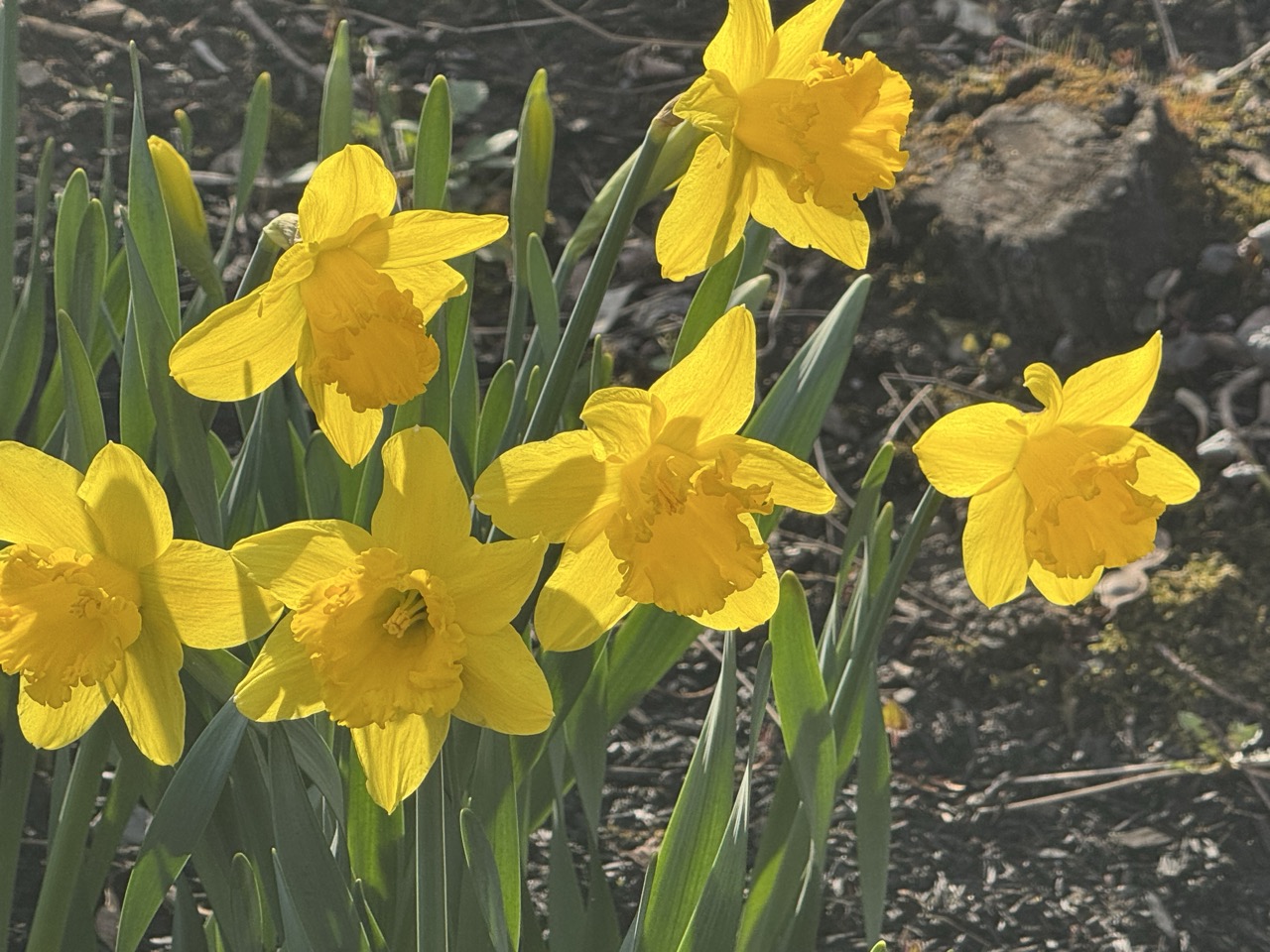
Daffodils enjoying another mild spring morning today
in their St. Albans, Vermont garden plot.
This spring in Vermont - pretty much this year so far actually - has been remarkably mellow, at least in terms of weather. 

Sure, we had a big February snowstorm, some weird mid-March warmth and a damaging ice storm at the end of March, but - knock on wood - we have not had a chaotic weather year so far in Vermont. 

No epic spring snowstorms, no record summer-like heat waves, no floods to speak of, and few wild swings from hot to cold. 

That's a nice contrast to the extremes and disasters we've seen in Vermont in recent years, and the many dangerous, deadly tornadoes, floods and wildfires many other parts of the U.S. have endured so far this year. 

April so far has been especially quiet in the Green Mountain State. 

Conditions in the past couple of weeks have plodded along with extraordinary ordinariness, if that makes sense. Temperatures and precipitation this month have been close to normal. Temperatures have never really gotten that hot or that cold. 

We've had only one day in Burlington so far this month that was more than ten degrees above or below normal. We sometimes have several April days that are 20 degrees warmer or colder than the average for the date

I know I've probably jinxed it with this post and we'll now face months of scary weather. But for now, I'm not seeing any big weirdness coming our way.

However, things in the weather department are about to shake up from the doldrums just a little. 

On the agenda is a low risk of thunderstorms today, a likely soaking weekend rain, and - perhaps - the first summer like day of the season in northern Vermont. (Southern parts of the state already had one summery day a little over a week ago).

TODAY

A little disturbance racing through late this afternoon and early tonight might be enough to set off some showers and maybe even a couple weak thunderstorms. Anything that develops will be hit and miss and if storms do get going, they not even be close to severe. It's just another reminder that we're getting into that warm season showery regime.

So far this month, when it has rained, for the most part each episode has featured only pretty light showers. There's been a couple of exceptions, but there's been no "wow" factor to any storms.

WEEKEND SOAKER THEN WARMTH?

Friday night and Saturday, it looks like we are in for a pretty good wetting. This one won't be extreme, either, but early indications are most of us should see a half inch of rain at least, with a few places getting an inch.

That amount won't break any records and absolutely won't cause any flooding worries, but it could be the wettest storm of the month for many of us. The gardens could use a good soaking, so that's OK. 

In northern Vermont, temperatures have not gotten above 70 degrees since mid-March. In the past decade or two, it's gotten rare to have an April without any 70 or even 80 degree weather, so this month is so far an oddity.

But as the month draws to a close, it looks like we might finally get a brief squirt of summer-like air. If the showers hold off long enough next Tuesday, places like Burlington could make a run at 80 degrees.

We shall see.

The only disconcerting thing I see in the extended forecast is the possibility of a cold storm stalling overhead or nearby around May 7. If that happened, we'd have a big interruption in spring and maybe even some snow.

I would rate this as highly unlikely, though. Such long range forecasts are seldom accurate, so I wouldn't worry too much about that.    

Saturday, April 12, 2025

Another Snowy Vermont April Morning Underway; But Compare To Some Aprils, This Is Easy

Traffic cam grab from Route 11 in Winhall, a high 
elevation town in southern Vermont, shows 
seemingly midwinter conditions early this morning. 
 So far early this morning, the April snow in Vermont is working out about as forecast.

A band of at least moderate intensity snow had moved into far southern Vermont at dawn and was pushing northward. 

It was a really wet snow, especially in the valleys, as temperatures as it snowed were around 33 or 34 degrees. It's piling up more quickly up in the slightly chillier hills and mountains. 

As it is, we do see snow covered roads, especially in higher elevations of southern Vermont this morning. 

So you might want to be careful if you're traveling around the southern half of the state today. Especially if you're headed for the hills.

We might see a few scattered power outages, too ,as the wet snow piles up on trees and power lines that criss cross along higher mountain roads. 

Winter weather advisories remain in effect for the southern half of Vermont, except for the western portions of Rutland and Addison counties, which will get little snow out of this. People in the advisory area can expect two to six inches of sloppy snow, the most in the mountains, of course. 

The main show with this storm will be this morning in southern Vermont. Bursts of moderate snow will continue, but later today, the band of precipitation will head north, leaving behind a gloomy afternoon of light rain showers, with some wet snowflakes in the high elevations 

As impressive as this band of snow and some rain looks on radar, it's still expected to fade as it works its way northward today. Pretty much everybody in Vermont will see some rain and snow today, but it will be pretty light and inconsequential up by the Canadian border.

It still might be cold enough to snow - especially  above 1,000 feet in elevation in central and parts of northern Vermont, but that will only amount to a coating to a slushy inch most places. It'll be close, but it looks like any light rain in the Champlain Valley probably won't mix with any snow. But no promises. 

In the grand scheme of things, this isn't a blockbuster snowstorm. It's April, so you'd think we'd avoid the Big Ones, but not necessarily. 

 If you're not happy with today's snow, it could have been worse. Much worse.

APRIL SNOWS COMMON

Could be worse. After a warm April in which trees 
started leafing out, more than a foot of snow fell
on St. Albans, Vermont, causing severe tree
damage and widespread power outages in
town and across northern Vermont. 
We have many, many examples of Vermont Aprils that were much snowier than this year. A cold, gusty snowstorm dumped 10 to 20 inches of snow on southern Vermont on April 6-7, 1982. 

A year after that, on April 16-17, 1983, a snowstorm dumped 15.6 inches of snow on Burlington.

 Then it kept snowing off and on for five days after that. That month ended up with 21.3 inches of snow in Burlington, the snowiest April on record.

An almost identical storm to 1983 hit in April, 2000, depositing a four-day total of 19.1 inches of snow on Burlington. 

Even unusually warm Aprils can get snowy. April 2010 featured record highs in the low 80s early in the month. Then on April April 27-28, 10 to as much as 23 inches of snow fell across northern Vermont. In the valleys, the trees were already starting to leaf out due to the early spring. As a result, the wet snow caused a lot of tree damage and many power outages. 

Then, just four days after that snow ended, temperatures rose into the low and mid 80s.

April and early May can really be fickle, huh?

By the way, this month's snow has been mostly avoiding Burlington. So there, at least, April snowfall this year will be below normal. So far only 0.4 inches of snow has fallen this April in Burlington. Normal snowfall for the month is 4.1 inches. 

It's also nearly impossible to get through a Vermont April without snow, even in the Champlain Valley. In the past 140 years or so, only two Aprils - 1941 and 2005 - have gone by in Burlington without so much as a snow flurry. 

And in 1941, there were snow flurries on May 1 and 2 in Burlington. 

END TO THE SNOW?

There is light at the end of the snow tunnel, so to speak.  The end of the snowy regime this April is coming but we'll have to wait several days for Vermont to fully escape the flakes. 

It will warm up briefly on Monday before we get hit by another cold snap later Tuesday and Wednesday. That one still looks like it will spit out some more snow showers, especially north.  The Tuesday night/Wednesday thing at this point looks a little bit similar to a week earlier, when the northern Green Mountains received several inches of snow.

This next one doesn't look quite as impressive as last week's, but I wouldn't be surprised to see at least a few inches of  additional snow in the mountains by Wednesday. 

Now, on to tthat hopefully snow-free future: After next Wednesday, I'm still not seeing signs of a big springlike warm up. I also see frequent chances of inclement weather through the end of the month. But, fingers crossed! It looks like each little storm to close out the month will come as your standard April showers, not late season snow blitzes.  

Then again, I can't tell you how things will work out in May.  I have seen it snow in May, so there's that. 


Friday, April 11, 2025

Friday Evening Vermont Snow Update: Yes, An Update, As Forecast More Wintry Than This Morning

Snowfall mostly in southern and central Vermont looks
like it will be more widespread and a little heavier
than forecasts had indicated this morning. 
 Vermont - at least a sizable chunk of it, looks like it's going to be snowier than originally thought on Saturday. 

Winter weather advisories have been posted for basically the southern half of Vermont excluding the western parts of Addison and Rutland counties. 

Essentially a band of precipitation that I mentioned in this morning's post that we know will move south to north over Vermont will have more oomph that first thought. 

That means the snow and rain will be heavier that expected in southern Vermont and will have more staying power than originally thought as it works its way north. 

Heavier precipitation tends to cool the air, so the marginal temperatures we're expecting means some parts of southern Vermont are in for quite a bit of late season snow.

Who gets how much will depend on elevation. Valley towns in southern Vermont like Bennington, Brattleboro and Springfield will probably see about two inches of wet snow. It'll be hard for snow to accumulate in the valleys. 

It'll be snowing hard enough, but the sun angle this time of year is the same as it is in late August. Some of the heat will penetrate the clouds and melt some of the snow as it melts.

It might be a different story though in the slightly colder southern Green Mountains. Those areas could see six inches of snow in spots, or even a little more than that. Some roads will be slick across southern Vermont, especially in the morning before the sun can really come up.

Since this will be a wet and heavy snow, I wouldn't be surprised if there are a few power outages as well. 

The snow will tend to lighten up and mix with rain in southern Vermont during the afternoon. 

Meanwhile, the snow will continue to make its way further north than this morning's forecasts suggested. High elevations as far north as Stowe could see two to four inches of wet snow, while valleys away from the Champlain Valley could see a slushy coating to as much as an inch. 

There's a big caveat here. If the trends in forecasting meteorologists saw this afternoon continue on that path, central and northern Vermont could actually see a little more snow than what I'm outlining here.

This morning, I said that the northern Champlain Valley might get no rain at all. Since this push of precipitation has more oomph than expected, now it looks like it will probably rain at least a little, so Saturday won't be a nice day 

The bulk of the precipitation will hit northwest areas in the afternoon, when it's warmest. Plus, rainfall rates won't be that impressive, so folks in Burlington and St. Albans very likely won't see any kind of changeover to snow.

Unless this little stormy episode continues to surprise. 

Sunday is looking much better, as skies will start to clear, at least in western Vermont. Eastern Vermont might stay cloudy with a risk of a few light showers. At least it will be warmer, with highs near 50 east and in the 50s west.

That should start to melt Saturday's snow in a hurry.  

Yes, The United States HAS Had A Lot Of Tornadoes This Year

A massive tornado in Lake City, Arkansas on April 2.
So far, this has been a very busy season for 
tornadoes in the U.S.
 If you been thinking that almost all you've heard in weather news this spring is tornadoes, there's a reason for it. 

The United States has had an exceptionally busy early part of tornado season. Through April 7, there have been 473 tornadoes. 

On average by April 7, there's normally about 270 tornadoes this far into the season, according to NOAA's Storm Prediction Center. 

That doesn't necessarily mean that will continue, but for now, we're way ahead of normal.

March got things off to a rousing start and the first week of April was even worse. A lull in tornado activity started on Monday and will probably last at least a week during which few tornadoes will touch down. 

But there are tentative signs that things could get really busy again toward the end of the month as we head toward the heart of tornado season. (Tornadoes activity usually peaks in May and early June).

 MARCH

There were no fewer than 175 confirmed tornadoes in March, and that number might go up as other reports are confirmed.

That's double the amount the United States usually sees in March..

March was punctuated by an unusually large tornado outbreak in the middle of the month with 116 twisters reported.  That's a big outbreak for any time of year but it's really odd for so early in the season. 

 The two busiest years for March tornadoes were 234 in 2022 and 208 in 2023.  Part of the issues is weak tornadoes are better detected than they were years and decades ago, so those are added to the count. 

March is usually just the beginning of tornado season. The vast majority of U.S. tornadoes strike in April, May and June. 

APRIL

April got off to an explosive tornado start. So far, no fewer than 182 tornadoes have been counted in the first seven days of April. That number -  182 - happens to be the average number of tornados for an entire April.  That's easily one of the busiest early Aprils on record. Through Monday, tornadoes had been reported somewhere in the U.S. on 12 consecutive days. 

That's the earliest in the year on record in which there were at least ten consecutive days with tornadoes.

As noted above, we have a lull going in tornado activity. Especially given super April tornado outbreaks in 1974 and 2011, I doubt there will be record number of twisters this month. Still forecasters are expecting at least the possibility of a notable uptick in severe storms and tornadoes toward the end of this month. 

Generally speaking more tornadoes occur in late April rather than early in the month. 

The record for April twisters is 757 in 2011. Interestingly, last year had the second highest number of April tornadoes with at least 356 twisters.

By the way, last year was the second busiest tornado year on record, with just under 1,800 twisters in the U.S,

LA NINA/CLIMATE CHANGE

However, the Washington Post reports that the increase in March tornadoes in recent years can't be fully explained by better counting. 

Part of it might be La Nina, a periodic cooling of eastern Pacific waters. One of the effects of that cooling is a wavier jet stream across the continental United States. A wavy jet stream means more and stronger storm systems. 

If these storms can produce the correct clash of warm, humid air from the south and frigid air from the north, and adequate shifting winds in the atmosphere, you get tornadoes. 

Both 2022 and 2023, those busy tornado Marches, were La Nina years.

La Nina has pretty much faded away, so that will probably be no longer much of an influence on the rest of tornado season. The second reason for so many tornadoes might not go away so fast. And this second reason has to do with climate change.  The Gulf of Mexico is toastier than normal, a trend that has been consistent in recent years as a warmer atmosphere also heats up the oceans. 

When the Gulf water is warmer, it allows even more moisture to stream northward into the kind of storm systems that spin off tornadoes. Humid air is a key ingredient for tornadoes, so the more moisture the merrier, at least from the perspective of twisters. 

La Nina is fading. And besides, the effects of La Nina tend to fade as we head further into spring.

However, warm Gulf of Mexico waters do influence tornadoes well into spring and early summer. 

That's not to say the rest of tornado season will be supercharged. It just increases the odds somewhat. 

But you never know what will happen. March, 2012 was a busy and tragic month for tornadoes, with 223 twisters reported. 

That month was punctuated by an intense tornado outbreak on March 2-3 that produced 81 tornadoes which killed at least 40 people.

But it turned out the rest of the 2012 tornado season was pretty unremarkable. The year ended up with about 1,000 tornadoes, Which seems like a lot but was still about 300 below normal.

By contrast, there weren't many tornadoes in March and early April, 2004. But the year turned out to have the most tornadoes on record, with 1,819 twisters, including 389 in just the final 11 days of May that year.   Tornado deaths that year were mercifully low considering the numbers, amounting to 35 people 

That's tragic of course, but fewer than in many of the slowest tornado years.  

Vermont Just Can't Seem To Escape The Clutches Of Winter

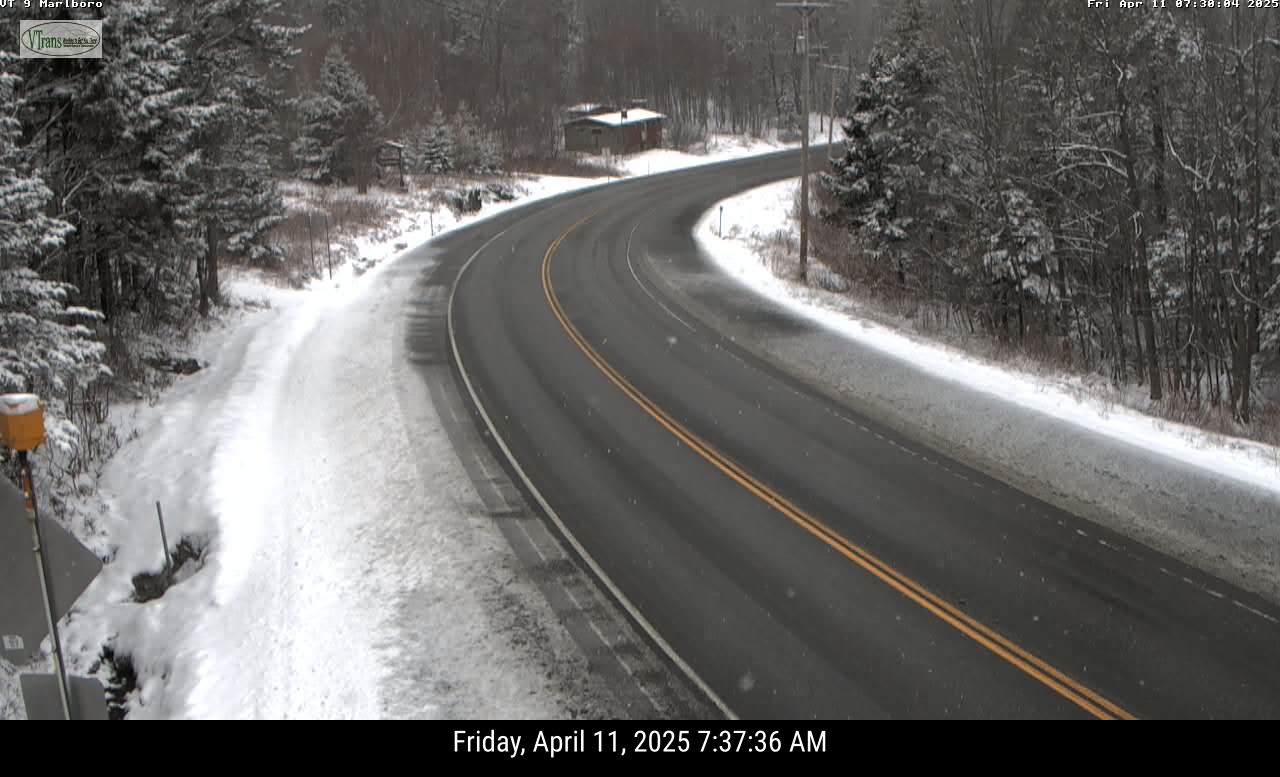
Another snowy April morning in parts of Vermont today.
as this traffic cam view of Route 9 in Marlboro,
Vermont shows. More snow is due in parts
of the state on Saturday. 
 Winter weather keeps poking its head into our April springtime here in Vermont, like an annoying person at the next table continually butting in, interrupting your romantic restaurant dinner to comment on the food, service etc.  

Spring keeps trying to advance in Vermont, but lately, it's been tough, with plenty of setbacks. 

Yesterday morning in Montpelier, it got down to 16 degrees, a record low for the date, beating out the 17 degrees set in 1997.

The snow depth near the top of Mount Mansfield reached 92 inches yesterday, which was actually seven inches deeper than it was at the start of the month. 

In parts of southern Vermont, it snowed again last night. Traffic cameras indicate the high elevations got somewhere around an inch of snow. Even valley floors in southeastern Vermont, like around Brattleboro, got a slushy coating.

And there's more snow on the way. 

SATURDAY

Yes, we have to post yet ANOTHER snow prediction
map for Vermont. April does not spell the end of this 
in the Green Mountain State. Some high elevations
of southern Vermont could see four or five
inches tomorrow. Northern areas mercifully
lose out on snow chances. 
A storm of sort is going to send a band of precipitation northward across Vermont Saturday. When it enters southern Vermont, precipitation should be fairly heavy.

It will also be cold enough for snow. Low elevations in southern Vermont could pick up another inch or two of snow out of this, while high elevations could go as high as four or five inches.  

The band of precipitation will weaken as it heads north and northwest during the day, so snow amounts will diminish the further north you go.

 Plus, lighter precipitation doesn't help cool the air as much as heavier rates do, so chances are a lot of this will be rain in low elevations central and north. 

By the time you get into the central and northern Champlain Valley, and near the Canadian border, the band of inclement weather will have weakened so much that very little rain or snow will fall. If any. 

This state of affairs will make for some "backwards" Saturday temperatures.  The coldest part of Vermont will be in far southern parts of the state, where highs might well just stay in the 30s. By the time you hit Montpelier and Burlington, it'll get up into the 40s.

Way up north, up by St. Albans, Highgate. Alburgh and over to Newport  it could reach 50 degrees.  

BRIEF SPRING BREAK

We'll get a very brief break from our winter in April Sunday and especially Monday. It's now looking like the sun will want to come out Sunday in most of Vermont, which would bring us up into the seasonable low to mid 50s.

Monday looks like it will get into the pleasant low 60s in many valley locations, and well into the 50s elsewhere. So pretty nice. Don't count on it lasting.

WINTER NEXT WEEK

Another cold front will bluster through on Tuesday, dropping our temperatures back below normal again for the middle of next week. 

Tuesday might start out warm-ish but a cold front will probably bring rain Tuesday,  then perhaps some  snow showers by Tuesday night and Wednesday, especially  north and mountains.  As it looks now, highs Wednesday will only be in the 37-45 degree range, again, pretty chilly. 

WHY THE CHILL

Ironically,  our bouts with April chill are a bit of a sign of spring.  The polar vortex, a swirl of intensely cold air takes up residence somewhere in the far north every winter. Its position relatively close or far away from us determines whether it's cold or warm around here,

Every spring, usually around mid-April, the forces of spring disrupt the polar vortex and it kind of disappears and goes into hibernation for the summer.

This year, that disruption happened earlier than usual - in mid March.  When the polar vortex gets wrecked like that in the spring, it can change the jet stream to push cold air into the eastern United States and parts of northern Europe.

That's what happened here. Since the polar vortex mess happened early this year, the resulting cold air up here in New England was more noticeable than it would have been later in the spring. 

Normal temperature are rising rapidly this time of year, so in general, each cold front will create less of a sting as we move forward through the month. 

There's mixed signals as to whether we'll see any sustained warmer weather for the last two weeks of April.  Many forecasters think the effects of the polar vortex's spring demise will fade by late April, and we'll be able to get on with our regularly scheduled springtime. 

We deserve it. 

Monday, April 7, 2025

Monday Morning Vermont Weather Update: Wintry, Then Blah

Traffic camera image from around 7 a.m to day shows
snow falling along Route 7 in Shaftsbury. Far southern
Vermont had some light accumulations this morning
with more snow on the way pretty much 
statewide on Tuesday. 
We shouldn't be surprised to see snow in the Vermont forecast in the first half of April, but those of us pining for spring are always a little disappointed. 

Prepare for just a bit of disappointment. 

It was already snowing lightly in far southern Vermont this morning, as a weak wave of low pressure scoots by to our south. 

It looks like a dusting of snow made it as far north as about Mount Holly. Traffic cameras show up to an inch of new snow near and along Route 9 not far from the Massachusetts border. 

Today the nicest, warmest weather will actually be in northern Vermont, where some sun will boost temporaries to 50 or so in the mildest valleys and 40s elsewhere. 

Clouds will keep the southern half of the state in the 40s. 

This will actually feel warm compared to tomorrow and Wednesday. 

TUESDAY

We're still looking at a pretty potent disturbance and cold from to come through late tonight and Tuesday morning. Most of us won't get much snow, but we're still looking at some bad timing. 

The heavier snow showers should hit in time for the morning commute, so even the Champlain Valley might see some slick roads.  

The snow map is back again. National Weather Service
in South Burlington is calling for an inch or
two of snow tomorrow in the valleys. The Green 
Mountains could see several inches of new powder
Snow showers will also continue all day and it will be unseasonably (but nowhere near record) cold. The coldest high temperature on record for Tuesday in Burlington is 28 degrees, and it will get warmer than that. Sort of.

Highs should say in the 20s in higher elevations and 30s in the valleys. Blustery winds and continued snow showers will make it feel Januaryesque. 

Valleys will only see a half inch to at most two inches of snow, but this is a situation in which the Green Mountains will have a decent late season dump. 

 I'd say most of our mountains should see at least two to six inches of snow through Tuesday evening. The northern Greens, especially around Jay Peak could easily see eight or more inches of snow.

Late season skiers are probably happy about that. 

LATE WEEK

After a chilly Tuesday night with lows in the teens and 20s, Wednesday will be chilly and dry.  With some sun.  

At this point, it looks like Thursday will cloud up, introducing what might well be extended period of blah, chilly April weather. 

And narrow, steep dip in the jet stream will set up over the East Coast for the end of the week and weekend.  This will set up either a nor'easter type storm or a series of weaker storms riding north along the coast and on through New England. 

Unless things change radically in the forecast, this would guarantee cloudy skies, cool temporaries and high chances of rain Thursday night through Sunday. 

It's hard to say how much rain we'll get.  Early indications are the heaviest stuff would be south and east of us, and we'll be just stuck with occasional light rain.  But, we'll have to wait and see on that to be sure. 

It also looks like whatever comes from the sky Thursday and into the weekend will be rain. There might be some snow up in the high elevations, but that's to be determined. 

I don't see anything in the weather pattern beyond that suggesting lots of warmth and sunshine, so boo on that. But this time of year, normal temperatures are rising rapidly, so cool weather just doesn't have the same sting as it did even a couple weeks ago. 


Saturday, April 5, 2025

One More Day Of Extreme Rains, Tornadoes To Plague Battered U.S Middle, Here In Vermont, Just Minor Weather Hassles

Hopkinsville, Kentucky is one of a great many communities
in the middle of the U.S. suffering flooding as a weeklong
torrential rain storm and severe weather outbreak causes
havoc from Texas to Ohio. Photo by George Walker IV/AP
 The nation's middle needs to get through one more day of torrential flooding rains today and maybe some more tornadoes before relief begins to arrive tomorrow. 

 Since Tuesday, the Midwest and South have endured at least 83 tornadoes, and that number will go up as damage areas are assessed.  

This includes at least 14 twisters on Friday scattered around northeast Texas, Arkansas and southeast Missouri. 

More tornadoes are in the cards today for parts of Louisiana, Mississippi and southeast Arkansas.

The real story, as expected, is shifting toward the torrential rains, which will continue unabated today. 

The area under the gun is huge. A long string of flash flood warnings extended from northeast Texas to southern Illinois this morning. Flood watches go from Texas to southwest Pennsylvania.

Already, we tragically have one flood death, that of a nine year boy swept away and drowned in Frankfort, Kentucky.

As in virtually all disasters, the flooding is beginning to hit some towns harder than others in the same region. 

Downtown Hopkinsville, Kentucky was under water as six to 10 inches of rain swamped that area. A dozen people had to be rescued from flooded homes.  Similar water rescues were reported in far flung places like Van Buren Missouri and Texarkana, Texas. Four inches of rain fell in Cape Girardeau, in southeast Missouri within eight hours. Three inches of that came within two hours. 

Hundreds of Kentucky roads were blocked by high water as of Friday. It was still raining hard in Kentucky this morning. 

Friday's rainfall curved a little north and west of where it was centered the day before. It was mostly Arkansas and Kentucky that saw the worst of it. 

Both states will get nailed today by up to nine inches of rain falling on already waterlogged ground. Which will exponentially worsen the flooding.  Today will be the worst day of the flooding as a result.  The torrents will also creep back southeastward back into Tennessee and northwest Mississippi, so the flooding will broaden.

 The stalled weather pattern will finally begin to break down Sunday.  There could be some severe storms and local flooding in the Gulf Coast states Sunday, but it won't be as bad as what we've seen this week from Texas to Ohio. 

Even after the rain stops, the flooding will continue and in some cases worsen in the coming days as larger rivers crest.

FLOODS AND CLIMATE

I can't definitively say that this mess was "caused" by climate change but it's consistent with the planet's warming.

Torrential rains and flooding have always struck the South and Midwest occasionally in the spring storm season. But this storm - and several others earlier this year and in recent years - have proven especially torrential and disastrous. 

For instance, this is Kentucky's second "100 year rainstorm" in less than two months. 

Climate change turbocharges storms, and makes what would have been a heavy rain especially torrential. In other words, the weather setup that is causing this week's flood disaster might have happened anyway without climate change. 

But chances are the rain associated with it is much more intense than it would have been in a cooler world. So the flooding is worse than it otherwise would be.  

VERMONT WEATHER

We're getting remarkably close to daffodil bloom
time in St. Albans, Vermont. Earlier than normal 
once again due to a string of warm springs 
recently. However, chilly weather over the next
several days should temporarily slow our 
progress through the spring green up season.
We continue to be blessed with pretty benign weather here in the Green Mountain State, at least compared to so many other areas of the nation. 

The weather will be far from perfect for the next few days, but you have to expect that around here in early April. 

The good news is forecasters have somewhat backed off from the idea of freezing rain in eastern Vermont and the Green Mountains. 

There could still be patchy ice up high in the mountains.  Swaths of the Northeast Kingdom should also be cold enough for freezing rain this afternoon and tonight. 

Those temperatures will be marginal, so the ice will be patchy.  It'll be enough to make some of the roads up that way treacherous today and tonight, but very likely not enough to create some power outages.

The other trouble spot today is the northern Champlain Valley. Ice won't be a problem there, but gusty winds might. 

A wind advisory is up in the central and northern Champlain Valley from mid-afternoon today to after midnight tonight. Gusts could reach up to 50 mph.  The rain falling during this time period might tamp the wind gusts down a little though. 

Everybody will be rainy this afternoon and tonight. It won't really come down that hard, though, so this won't cause any flooding. It'll make mud season a little worse than it already is, but that's about it. 

Sunday is looking a little more optimistic than earlier forecasts, especially the further north and west you go. After a gray morning that will carry the risk of a little lingering rain, we expect some sun in the afternoon. 

It won't be all that warm with highs mostly in the 40s, but still, not bad for early April. 

The next problem is Monday night and Tuesday, when a potent little disturbance and blast of chilly air invade. There won't be much accumulation, but the timing looks lousy. At this point, some heavy snow showers look like they might come through right during the Tuesday morning commute. 

It'll be enough snow in many areas to make the roads slick and awful.  Stay tuned for updates on that.

After that, the weather pattern is shifting for awhile, anyway, in which we'll see mostly near normal temperatures  and  no blockbuster storms in or near Vermont as we head into the middle of the month. 

Tuesday, April 1, 2025

Vermont March Weather: Warm And Weird

A warm March sent daffodil shoots growing much
earlier than normal in Vermont this year. This new
spring greenery had to endure occasional wintry
setbacks, as seen here on March 21. That state
of affairs will continue into April. 
 Well, we got through another month, so it's time to look back at our overall Vermont weather in March, which, as you might have noticed was weird. And warm. 

MARCH TEMPERATURES

Burlington came in with a mean temperature for the month of 38.0 degrees. That puts us in a three way tie with 2010 and 1902 for the sixth warmest March on record. 

It's also the sixth time in a year a month in Burlington was in the top ten warmest list. 

This March was even warmer than the one a year ago, in 2024 which was merely the seventh warmest on record. Yeah, we've had a lot of hot Marches lately. A lot of hot months and years, actually, thanks to climate change. 

The entire rest of Vermont was much warmer than average in March, too. But figures are incomplete, as I noticed missing data on a few days from several of our regular long standing weather stations like Rutland and St. Johnsbury. 

The warmest March day in Burlington was 72 on the 19th and 20th.  This makes March, 2025 one of only 11 Marches in the past 140 years or so to get that warm.  It was not close to the hottest March day on record, though. It was 84 degrees in both March, 1946 and March, 1998.

Rapid snowmelt and some rain led to widespread, but minor flooding across Vermont around St. Patrick's Day. 

You could see the effects of such a mild March by the unusually early signs of spring. Crocuses were blooming by mid-month in a few locations. Green daffodil shoots poked up all through the second half of the month. The sound of returning red wing blackbirds filled the air in marshy areas way earlier in the month than usual. I even had a report of two of people in southern Vermont hearing spring peepers yesterday. That's really early for the season. 

Burlington had its final zero degree reading of the season on March 3. That meant nine days this past winter got to zero or below.  Historically we'd have roughly 20 or more such days per winter, so the downward trend in very cold days continues. 

MARCH PRECIPITATION

It was a little wetter than average virtually everywhere in Vermont in March, which is a good thing since we still have lingering effects from last autumn's drought. 

Precipitation wasn't overwhelming, though, as Burlington had 2.81 inches of rain and melted snow and ice. That's just a little over half an inch above average. By my count, Burlington had its 37th wettest March on record, so not all that impressive.

Precipitation around the state was similarly above average, but not to an extreme extent. 

Winter this March was notably absent until the end of the month. Early in the month, the summit of Mount Mansfield did have its highest snow depth since at least 2019.

But in most of Vermont aside from high elevations, very little snow fell into the end of the month. 

As we just saw, the last weekend of the month brought a big thump of five to nine inches of snow to the north, and a quite damaging ice storm to parts of central and southern Vermont.   

The snow and ice melted quickly during another very warm final day of March, though as of early yesterday, there was still 89 inches of snow near the Mount Mansfield summit. 

APRIL OUTLOOK

April is often regarded as a cruel month, as you think spring is coming, but you always end up getting slapped in the face with winter. 

That's no different this year. 

Today will be much colder than yesterday as many of us won't get out of the 30s. 

And, of course, Wednesday night, we're in for yet another round of snow, sleet and freezing rain. Though it won't be as bad as the last one, eastern Vermont in particular will likely see a glaze of ice, slick roads, and maybe an isolated power outage or two by early Thursday. 

The precipitation should change to rain on Thursday. 

Long range forecasts also call for mostly chillier than normal weather around here through at least the first half of April. We shall see. 

Even if it's a cool April, the forces of spring will win out. Normal temporaries rise rapidly. Today, the normal high temperature in Burlington is 48 degrees and the low is 30. By April 30, the normal high and low temperatures are 63 and 42 degrees.

You're going to see a much greener Vermont landscape by the end of the month compared to what it looks like now. 

Sunday, May 19, 2024

Yet ANOTHER World Record Hottest Month Recorded In April

Once again, hard to find cold areas (blue) that were chillier
than the 20th century average around the world in April. 
The world just had a record hot month, something that's been happening for nearly a year now. The April data is now in from NOAA's National Centers for Environmental Information, and the month was toasty again. 

Says NCEI:

"This is 0.18 degrees C (0.32 degrees F warmer than the previous April record set most recently in 2020, and the eleventh consecutive month of record high global temperatures. April, 2024 marked the 48th consecutive April with global temperatures, at least nominally, above the 20th century average."

The hottest areas compared to long term averages are northern South America, western Africa and the stretch of Atlantic Ocean between those two continents. Other notable hot spots relative to average were northern Canada, areas around the Indian Ocean, places near the border between Asia and Europe and eastern Asia.

As usual, cold spots were hard to come by. Parts of Antarctica were cold, which has been a trend in recent months. Other areas that came in slightly on the cool side (but not by much!) include central Australia, the southern tip of South America and a few lonely spots in the far North Atlantic. 

Overall, it was an early spring. The snow extent in the Northern Hemisphere was the lowest on record. 

Since the first four months of 2024 were record warm, NCEI gives the entire year a 61 percent chance of being the warmest on record, even beating the boffo warm 2023. NCEI also says that 2024 is a sure bet to score at least in the top five warmest. 

El Nino has ended, which tends to boost global temperatures. That, combined with climate change, helps explain why the past 11 months have been globally the hottest on record. 

The opposite La Nina  is taking hold which tends to cool the world just a bit. That's probably why NCEI is hedging its bet on this year being the hottest on record. I've seen some climate change observers suggest the run of global record warm months will end in about June. 

We shall see!

UNITED STATES

 For the Lower 48, April was the 12th warmest on record. No individual states had their warmest April on record, but a few scored in the top ten. 

The January to April period in the U.S is the fifth warmest on record. 

I could not find one county in the Lower 48 of the
United States in April that was cooler than average,
White counties were near normal, Orange ones
were warm, 

For the second month in a row, cool temperatures were hard to come by anywhere in the United States. 

That's odd, because even in a warm month, you usually see at least a small section of the nation with cooler than average temperatures. 

Not in April, at least not really.  A found quite a few areas that were pretty close to average, mostly along the West Coast, northern Plains and Florida. But a county-by-county breakdown of April temperatures revealed no areas that were noticeably cool for the month. 

The warmest areas relative to average were mostly in the Ohio Valley and Mid-Atlantic states. 

April in the U.S. was on the wet side, but not by a huge margin. It was the 41st wettest out of 130 years of records. In addition to the warmth, the Ohio Valley was among the wettest parts of the U.S. relative to average Parts of the central Plains and western Gulf Coast were also on the soggy side. 

Five more disasters costing $1 billion or more were added to the growing list for 2024. That brings the total documented so far to eight this year. 

The new ones included severe storm outbreaks in February and early April, along with two winter storms, one in the Northwest and one in the central U.S. during January. This list does not include the huge tornado outbreak in the nation's middle in late April.

Though that disaster is virtually certain to have cost more than $1 billion, proper assessments aren't done  yet. I also suspect a tornado outbreak earlier this month, and the epic storm in Houston Thursday evening will also each cost more than $1 billion.  

Wednesday, May 1, 2024

April Vermont Summary: Another Warm Month; Precipitation Pretty Average

Though April was a rather warm month, a big snowstorm
on April 4-5 didn't inspire much hope for spring. 
 The figures are in for April and, despite a big snowstorm toward the beginning on the month, we had another warm one.   

The Warmth

Most weather stations in Vermont averaged around a degree warmer than normal, give or take. But this is a "new" climate change normal, which takes into account the mean of the past 30 years.  Those years are warmer than what was typical of the 20th century, so the figures are a big skewed.

Let's take Burlington for example. The average temperature for April, 2024 was 46.9 degrees, or 1.3 degrees warmer than this "new" normal. But of the past 133 Aprils in Burlington, I could only find 17 Aprils that were as warm or warmer than this one.

Five of the Aprils that were warmer than 2024's version have happened since 2008.  

Also note that under this "new" normal, only one of the past eight months has been cooler than average. El Nino, which tends to warm us up, no doubt contributed to the warmth over the past year. Still, this isn't your grandfather's climate here in Vermont. 

Precipitation

Rainfall in Vermont was a little below average in the east of the Green Mountains and perhaps in some sections of central Vermont. Much of western Vermont was a little one the wet side, but not by much. 

For instance, Burlington clocked in with 3.21 inches of rain, which is just 0.14 inches above normal. There's been a mini-trend toward wet Aprils in recent years. Six of the past eight of them in Burlington were on the wet side. 

But spring did arrive amid consistently mild 
temperatures most of the month. A hard freeze on
April 25-26 didn't cause much damage. 

It seems like it's been a wet year so far, and it has. However, it's not that wet. Precipitation in Burlington through April 30 is 10.92 inches, or 1.71 inches above normal for this spot on the calendar. 

The only extreme weather in Vermont during April, 2024 was the big snowstorm on April 4-5.  Burlington collected 10 inches of snow in that episode, which means the month tied for the tenth snowiest April on record. 

Most of central and northern Vermont had at least a foot of snow in that storm, with several spots closing in on two feet. That's very impressive for an April snowstorm. The storm left 33,000 Vermont homes and businesses without power.

Almost equally as impressive is how fast the snow melted away. Snow depth at my house in St. Albans, Vermont went from 14 inches on the morning of April 5 to pretty much nothing by the time the total eclipse of the sun arrived on the afternoon of April 8.

A little more snow announced the start of a spell of hard freezes o April 24, but pretty much nobody saw any accumulations. Most gardens managed to survive the subsequent two nights with temperatures well down into the 20s and even upper teens.

The Big Event

Ah yes, the eclipse.  Certainly the big event of April, 2024 and a huge event in our lifetimes.

Climatologically, we had an 80 percent chance of overcast skies at the time of the eclipse. Literally for years before the eclipse I was pessimistic about how cloudy the skies would be. 

During the total eclipse of the sun on April 8, shown here
in St. Albans, high thin clouds added some color to
the skies near the horizon, as if it were a sunset. 

 In the months leading up to the eclipse, I kept saying the weather on eclipse day would feature dense fog with freezing drizzle.

The forecast on the morning of April 8 was a nail biter, as clouds began to encroach in the hours before the big event. 

In turned out the clouds only enhanced the experience. The clouds didn't cover the whole sky, and they were quite thin and wispy.  They formed a neat halo around the sun as the moon's shadow began to take bites out of the sun's disc.

When the total eclipse hit, the high clouds added some beautiful colors to the horizon as northern Vermont plunged into darkness. You could still clearly see the edges of the sun peeking from behind the moon during that incredible afternoon. We got totally lucky, pardon the pun, with the weather on the afternoon of April 8. 

Looking Ahead

As I say every month, it's hard to tease out what the upcoming months weather will be like. Long range forecasts through most of the first half of May suggest temperatures and rainfall might be close to normal. But as always, there will be some surprises in that department. 

Usually, May brings us our first taste of true summer weather. You know, 80s with noticeable humidity. 

That kind of weather knocked on our doorstep early this week, but got cut off at the pass so that most of New England stayed cool. 

I don't see any signs of such summer weather in any of the forecasts for the foreseeable future. Enjoy the temperate weather while it lasts. Long range forecasts from the National Weather Service suggest we'll have a hot summer.

We shall see! 

Saturday, May 20, 2023

Monthly Global Climate Report For April Has Some Ominous Signs

Berkeley Earth's temperature map of the world in
April, showing where it was warm or cold relative
to the 1951 to 1980 average. 
 As we do every four weeks or so, we've checked in with NOAA's National Centers for Environmental Information for the previous month's global climate summary. 

The report for April has some ominous signs. 

For the world as a whole, April was the fourth warmest on record.  That's in line with most months over the past year, in which we score in the top five warmest, but don't quite make it to hottest.  

That's probably a lingering effect of the La Nina pattern that brought a few years of cooler than normal waters to the eastern Pacific.

That, in turn, kept global temperatures from rising as fast as they might otherwise would have. 

But, now, we're transitioning to the opposite EL Nino pattern, which tends to boost global temperatures. Combine an El Nino with climate change, and you can really make things toasty fast. Which for course is dangerous if you don't like deadly heat waves, droughts in some areas and torrential floods and others.

The April report from NCEI gave hints that we might be starting to feel the effects of El Nino.

The Southern Hemisphere had its hottest April on record. In fact, in that hemisphere, it was the warmest month of any on record, period. 

But the real trouble sign is in the water. As a whole, the world's oceans were the warmest on record for  April. 

Warm water is a reservoir that can transfer additional heat to the atmosphere, further destabilizing the climate. And never mind how record high ocean temperatures can really do a number on marine ecosystems and fisheries. 

In April, the warmest spots, relative to average, were in northeastern Canada, the northeastern United States, Antarctica, eastern and southwestern Europe, western South America and parts of Southeast Asia.

The only coolish spots were a patch of the Pacific Ocean between Antarctica and the southern tip of South America, Alaska, northwestern Asia and western Australia. 

By the way, about 3.4 percent of the Earth's surface had its warmest April on record, according to Berkeley Earth.  That doesn't sound like much, but that's a lot of real estate and ocean surface to have a warmest month on record. By the way, Burlington, Vermont is included in that 3.4 percent with a record warm April. 

At the moment, Berkeley Earth is giving roughly even 50/50 odds that 2023 will be the world's warmest on record, as they expect to see El Nino's temperature boost become more apparent in the second half of this year.  

There's a famous United Nations goal of keeping global temperatures from exceeding 1.5 degrees Celsius above pre-industrial levels.  With El Nino about to give world temperatures a boost, the World Meteorological Organization is predicting that sometimes within the next five years, chances are we'll at least briefly go above that 1.5 degree threshold. 

The WMO is also pretty much guaranteeing that the next five years will be the warmest on record for the Earth, if you look at data since 1850. 

A more permanent shift toward global temperatures above the 1.5 degree threshold are expected in the 2030s, which really isn't all that far off if you think about it. 

Monday, May 1, 2023

April In Vermont Hottest On Record, Part Of Long Stretch Of Warm Months

View of my yard in St. Albans, Vermont, this morning
May 1. Spring is way ahead of scheduled after a 
record warm month of April. 
 At least as measured in Burlington, this April was the hottest on record, with data going back more than 130 years.  

The mean temperature for the month in Burlington was 50.6 degrees. This beats the previous record set in 1945 for warmest April by a full degree. Which is kind of impressive. A warmest month is fairly rare, but becoming more common with climate change. Usually, though, when we do manage to break a record monthly high, it's by a couple tenths of a degree.

The Aprils of 1945 and 2023 were quite similar in that they both featured a spate of record highs reaching into the 80s during the second week in the month. 

In 1945, there were four days in row with temperatures in the 80s from the 10th through the 13th.  In Burlington, it reached 88 degrees on April 13, easily the hottest for so early in the season. There was another record high of 85 degrees this year on April 15. Plus a non-record high of 83 on the 16th. 

Same view of my yard exactly one year ago, May 1, 2022.
You can see how much further ahead with spring we are this
year. And last year was a very early spring, too! 
In both 1945 and 2023, the second half of the month cooled off significantly.  But the second half of April, 1945 was much colder than the corresponding weeks in 2023.  In that month near the end of World War II, it got as cold as 24 degrees and some days never got above 50 for highs. 

In the month just ended, there were no freezes and every day got to at least 50 degrees and several days topped. 60.  That's how we beat out 1945.

To nobody's surprise, April was much warmer than normal in other reporting sites in and near Vermont. Most were at or near the top of the list for warmest April.

Precipitation was much closer to normal than temperatures. Burlington measured 2.81 inches of rain, which was just a quarter inch below normal. Northern Vermont was a little bit on the dry side for April, while southern Vermont was a little on the wet side. 

MORE THAN A YEAR OF WARMTH

Average temperatures for a month are calculated based on all the averages for the 30 years ending in 2020.  Using that method of measuring, the last time we had a "cooler" than average month was September, which was marginally on the chilly side.

However, those 30 years ending in 2020 were quite a bit warmer than previous decades, due to the effects of  climate change. It truly is a "new normal"

I like to judge how warm or cool a month was based on what were considered average temperatures for the second half of the 20th century. 

If you look at it that way, the last time we had a cooler than average month was in January, 2022.  Which would mean we've had 15 consecutive months of above average temperatures, at least as measure in Burlington. 

Spring greenery has come much earlier than normal in
Vermont due in large part to the hottest April on record,
at least as measured in Burlington. 

Last year was the fifth warmest on record in Burlington, Vermont. This year is so far on pace to beat that, but of course the year is still young. A lot could change. 

Without climate change, the averages would be a roll of the dice. Generally speaking, half the months would be on the cool side, the other half warm. 

This doesn't mean we'll never again have a cooler than average month. Even compared to the 20th century average. I guarantee we'll have a cold month here or there moving forward. 

But the dice are now loaded. They're weighted toward warm. So from now on, the chances of having a month that is warmer than than the 20th century average is definitely greater than it being on the chilly side. 

You see real world effects of all this.  I've never seen trees in Vermont blossom into leaf as early as I've seen this year. Lawn care companies started mowing weeks earlier than normal. Since it's only the beginning of May, we can still have hard freezes. If that happens, apple and other fruit crops would be in jeopardy.

The good news is that at least for the next few days, though it will be cool and dreary and wet, the chances of frost are quite low. But who knows what will happen later in the month?

Not only has the weather become warmer, it's also more erratic. The roll of the weighted dice can be damaging with this new climate regime. 

Thursday, April 27, 2023

Rare April In Burlington, Vermont: Only 13th April In 120 Years With Just Trace Of Snow

A snowstorm buries garden flowers in St. Albans, Vermont 
in April, 2021. Pretty much no snow this April, though. 
 It's a given that it always snows during April in Vermont.  But not this year, at least in parts of the state. 

Even in banana-belt Burlington, Vermont, you can expect at least some light accumulations. This year is a rare exception. Unless we see a HUGE surprise between now and Sunday, this will be only the 12th April in 121 years with just a trace or no snow. 

In order to qualify for a trace of snow, you need at least a snowflake or two hitting the ground. That happened on April 2 this year in Burlington, when a few light snowflakes floated down before dawn. 

It didn't stick, of course.

Only two Aprils - in 1941 and 2005 -  couldn't even muster a flurry. Those were the only Aprils in the past 120 years without so much as a snowflake drifting down in Burlington. 

With climate change, you'd expect Aprils to become less snowy. But looking at the stats, I really didn't see much of a trend with April snows. There's no increase in the frequency of virtually snow-free Aprils.  

Average April snowfall in Burlington is 4.0 inches.Twelve out of the past 30 Aprils in Burlington have had above average snow. That's nearly even steven, so I don't really see a trend. 

By the way, the snowiest April on record was in 1983, when we got plastered by 21.3 inches of snow. April, 2000 was close with 19.1 inches. 

Unless we get a snowy surprise in May, Burlington's snow total for this past season looks like it will amount to 72.8 inches. That's right around normal if you take into account the average over more than 120 years.

However, "normal" is regarded by the National Weather Service as the average for the 30-year period ending 2010.  That era was snowier, with a mean annual snowfall of about 88 inches, so we technically regard this past winter as a little on the light side with snow.

That's not to say we can't get more snow in May, just not often. In the past 120 years or so, Burlington has seen measurable snow in 12 Mays, the most recent being in 2020, with a whopping 0.1 inches. Before 2020, the last time Burlington had measurable snow in May was back in 1996, when 0.3 inches fell.

The snowiest May in Burlington was in 1966, when 3.9 inches fell during the month.  May, 1966 was a rough one in Vermont.  All but three nights in the first 14 days of the month had sharp freezes, and that includes a reading of 24 degrees on May 3, which to this day remains the coldest May temperature on record in Burlington. 

Montpelier was well below freezing each morning from May 2 through 13 with readings as low as 20 degrees. Brrr!!

I'm pretty sure we won't see anything like that this May. Fingers crossed it also won't except on the mountain tops, where it always does in May. It's hard to entirely escape winter in Vermont. 


Monday, April 17, 2023

April Heat Wave Finally Ending; We Might See Highs Like That Again Until Summer

It was hot again in northwest Vermont for one last day on 
Sunday. Also a bit more humid than on previous days,
so we saw a few of those billowy cumulus clouds
that are common in mid-summer, but less so now 
 It felt like a balmy summer morning in Vermont this Monday as the lingering effects of our record April heat wave remained. 

If you missed the warm weather this morning, you're (mostly) out of luck for probably the next several weeks. 

The heat over-performed in northwestern Vermont again on Sunday. Temperatures reached 83 degrees in Burlington. 

That wasn't quite a record high, but still a full 27 degrees above normal. Sunday's high and low temperature, combined with somewhat higher humidity than previous days, made it a perfectly average day - for mid-July. 

There were even those puffy, sort of towering cumulus clouds that are most common in mid-summer. I saw a couple isolate small air mass thunderstorms tower up in the Adirondacks, too.  You can get thunderstorms in April every once in awhile, but these partly heat generated ones are something for this early in the season. 

The cooling will start today as rain moves in.  High temperatures for the day will be this morning, with mostly of us getting into the 60s.  Which won't be hard to do since many of us were already there at dawn.

Temperatures will probably drift downward into the 50s this afternoon.   A cold front this evening will ensure we  go down further. 

By tomorrow and Wednesday, highs will only be in the 45 to 50 degree range. That's somewhat colder than normal for this time of year. It will feel like yet another shock to the system. Northwest winds will make it feel even colder.

Mountain tops will even get a little snow. That's not at all odd for mid-April, but it's definitely a change in the weather, 

We need rain after that weird hot spell, but I'm not impressed with the amounts forecast. Northwestern Vermont looks like they might get between a half inch and two thirds of an inch. The rest of the state seems destined to see a half inch or less.

The rain will dampen the tree pollen, which has been sky high in recent days, as anyone with allergies knows. Everything started bursting forth with flowers and buds and leaves all at once. The allergen onslaught was impressive. 

The hottest temperature - at least in Burlington - during this bizarre heat wave was 88 degrees. We might not see temperature that warm until June or July.  

The weather patter has shifted to one that will mostly keep us chilly for the next couple of weeks at least. We might one last brief, quick squirt of warm air Friday, but that might be it for awhile.